Fresh tariff threats to start 2026 have placed companies on alert, while U.S. ports prepare for another volatile year
What you’ll learn in this article:
- Why the latest round of trade threats is being dubbed “Trade War 3.0.”
- Which U.S. marine ports suffered the most from last year’s trade war.
- How to prepare your company for trade turmoil in 2026.
🎯 Best for: Supply chain directors, procurement managers, COOs and CSCOs.
Multiple new tariff announcements this month are sending a signal to U.S. ports and businesses around the world: prepare for the prospect of another unpredictable trade war in 2026.
On January 13, United States President Donald Trump announced a 25% tariff on Iran’s trading partners, an effort to further isolate that country amid widespread street protests. If that tariff is stacked atop existing ones for Iran’s largest trading partners, China and India, it would bring their respective tariff rates to 55% and 75%, respectively.
Five days later the President announced an additional 10% tariff on eight European countries as part of his campaign to secure ownership of Greenland. While those tariffs were quickly called off, the announcement led observers to label them Trade War 3.0, following previous trade wars in 2018 (1.0) and 2025 (2.0).
While no single policy package has yet reached the scale of the previous trade wars, the speed, unpredictability, and cumulative impact of recent announcements are already reshaping trade behavior.
“For businesses, it’s become clear that tariff rates anywhere in the world are still subject to change without notice, and that another trade war is something they need to prepare for,” says ImportGenius Founder and CEO Michael Kanko. “And U.S. ports will feel it the most because they are the country’s trade gateways.”
12 top seaports saw volumes shrink in rollercoaster year
Data for America’s top 25 marine ports, analyzed by ImportGenius, show that despite last year’s trade war, total TEU volumes in 2025 were 27.76 million, a number that’s exactly on par with 2024.
The data also shows that the trade war hit some ports harder than others, with 12 of the country’s top 25 ports experiencing declines in volume. For 4 of them (Wilmington NC, Mobile AL, and Seattle and Tacoma, WA) the decline was in double digits.
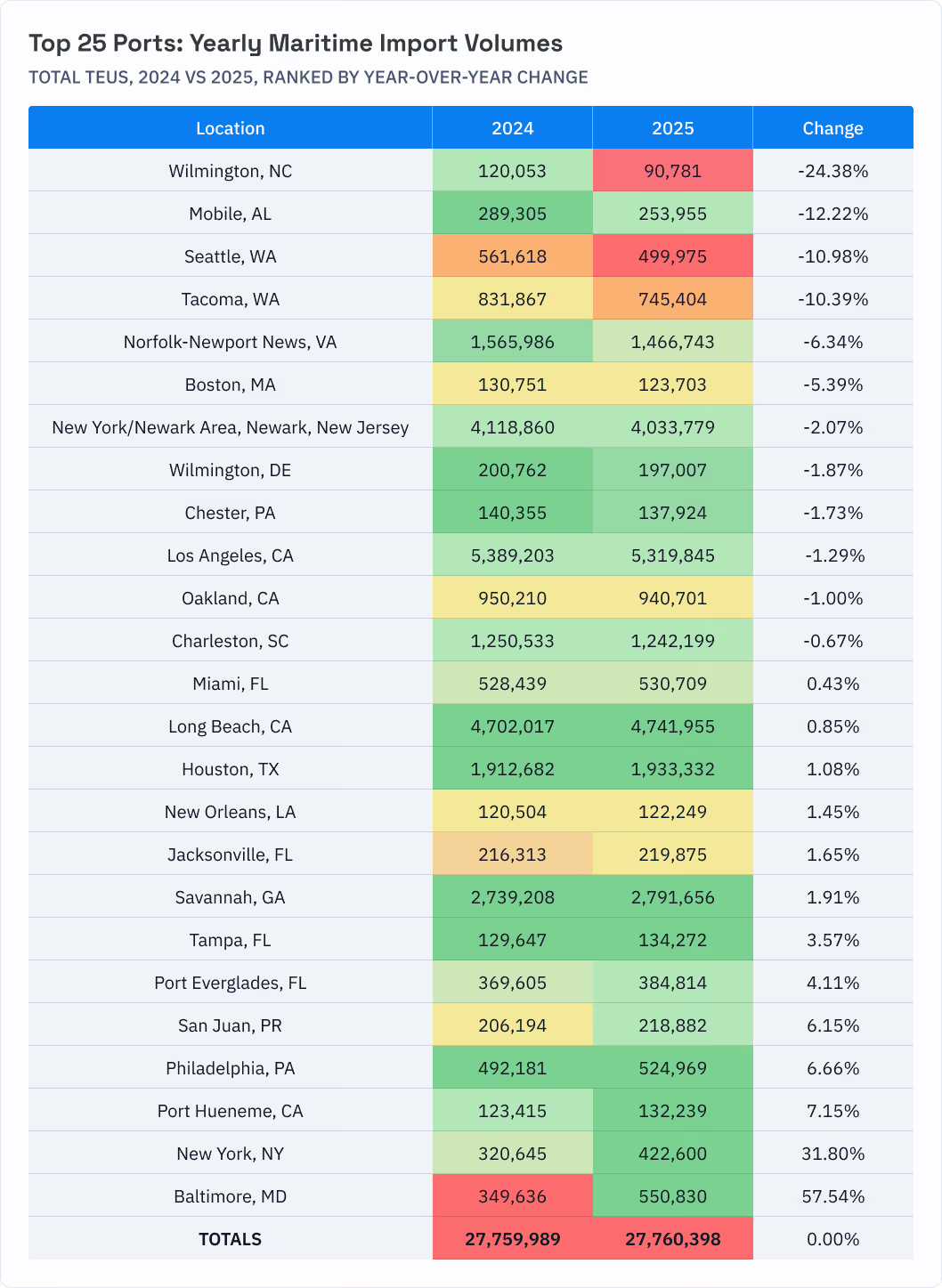
There are lots of nuances in the data. For instance, while the Port of Los Angeles, the second largest in the country, experienced a decline of only 1.29%, that represents 85,081 fewer TEUs arriving last year, a substantial drop. Baltimore’s increase, meanwhile, reflects its recovery from an 11-week closure in 2024 due to the collapse of the Francis Scott Key bridge.
The net result: overall U.S. import volumes held steady, but volatility intensified beneath the surface, creating clear winners and losers among individual ports.
“The data shows that the trade war isn’t just about American competition with other countries,” says Kanko. “With so many variables in flux, U.S. ports are competing harder than ever with each other for a share of total volume.”
How businesses can prepare for what’s next
Amid 2025’s trade war, businesses of all kinds responded with a mix of tactics, such as pre-importing and warehousing (which caused bonded warehousing costs to double), contract renegotiation, supplier diversification, HS code switching, and technology investments. Many integrated trade data analytics into their processes to feed real-time data into their decisions.
“Companies used every tool at their disposal to deal with last year’s trade war,” says Kanko. “But anyone who thought it would be a one-time fix was mistaken. They’re going to need to keep the toolbox handy again this year.”
Adds Kanko: “In this business environment, business resilience isn’t about having one set of defenses against a trade war. It’s about the ability to anticipate and respond fast to developments as they happen.”
[CT1]

Is your business ready for 2026?

Is your business ready for 2026?


More blogs & reports