
New Trump tariffs escalate risks for importers
With global pressure on the rise, companies need to eliminate any trace of forced labor in their supply chains
What you’ll learn in this article:
- How new U.S. tariffs are trying to end imports made with forced labor.
- What the global crackdown on forced-labor imports means for your company.
- How to use trade data to uncover forced labor hiding in your supply chain.
🎯 Best for: Supply chain executives, reputation managers, and sustainability and compliance teams.
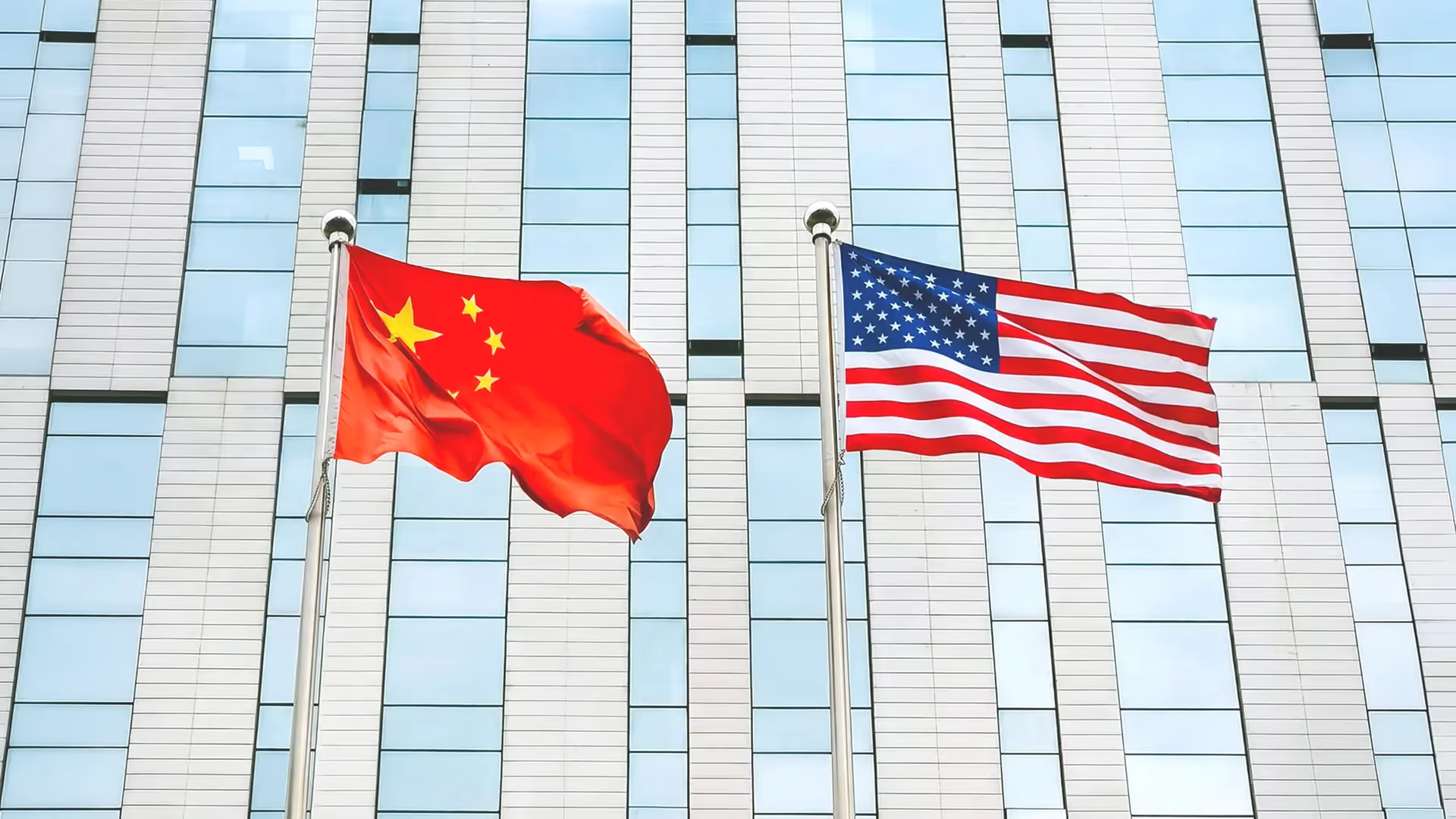
In less than 2 weeks, the United States will impose new tariffs on 60 countries for failing to enact or enforce laws banning the import of products made with forced labor. That’s led governments around the world to quickly clamp down on the practice, which in turn is escalating compliance risk for manufacturers and importers.
Last week Canada introduced new legislation that will increase the use of targeted inspections and border interceptions, and establish a list of regions and companies where forced labor is presumed to take place. The European Union, Pakistan, Indonesia and others are also taking steps to increase oversight and enforcement regarding imports made with forced labor.
That means any company that has forced labor in its supply chains (knowingly or unknowingly) is now facing a higher likelihood of having its shipments stopped, intercepted, or denied entry — not just in the United States, but in multiple markets around the world.
“Forced labor is more pervasive than most people realize, and its perpetrators take pains to keep it hidden,” says ImportGenius CEO Michael Kanko. “Importers of all sizes need to re-assess their supply chains to make sure they are not at risk.”
The lowdown on the new forced-labor tariffs
The new tariffs, announced two weeks ago, are the result of a series of Section 301 investigations into trade violations by America’s trade partners — part of the Trump administration’s effort to rebuild its global tariff wall. Those investigations found 59 countries, plus the 27-country European Union trading block, were negligent in their efforts to combat forced labor. \
.avif)
These Section 301 tariffs are more likely to withstand legal challenges than previous ones implemented under IEEPA (which helps explain why the Trump administration has also launched other Section 301 investigations). Ultimately, the only way to have them removed is through bilateral negotiations, which is why America’s trading partners are taking steps to combat the practice.
Most companies have their suppliers’ assurances that forced labor is not a concern. But in the absence of a thorough compliance or sustainability audit, its use could be hiding in plain sight.
How trade data can expose forced labor in any supply chain
ImportGenius’ own research team has helped uncover numerous instances of imports made with forced labor, including seafood harvested by enslaved fishermen, wigs made from the hair of internment camp detainees, and British imports of dozens of products linked to the practice.
“A key question is whether companies are sufficiently aware of their own suppliers’ subcontractor networks,” explains Kanko. Many businesses don’t have access to the data they need to build that awareness. Even companies that already use trade data to manage their supply chains need to extend their visibility beyond their first tier and into the broader supplier network. “The web of relationships can be expansive, and what companies don’t know can definitely hurt them.”
ImportGenius’ visual mapping feature can be a useful place to start that kind of deeper dive. The tool allows users to examine the trading relationships of any importer or exporter, producing a “tree canopy” of suppliers, shippers and buyers.
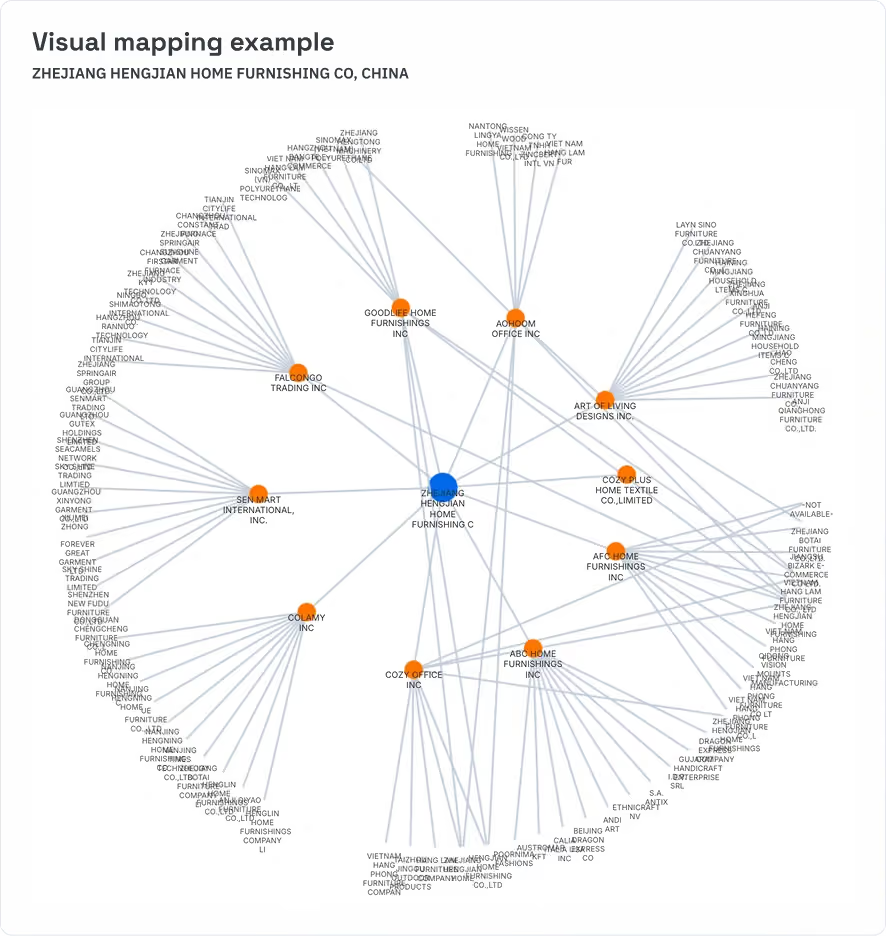
The visual mapping tool also allows users to take any other node or company in the tree and make it the root of a new visual map, providing the depth of visibility companies need.
“This is just one step in the process of assessing a supply chain, but it’s a crucial one,” says Kanko. “You need to know where the hotspots are and which trade routes carry the most forced-labor risk in order to connect the dots conclusively. But given the international response to the new tariffs, not connecting the dots isn’t an option anymore.”
[CT1]

Assess your risk now

Assess your risk now


More blogs & reports