In the Philippines, the Hormuz crisis has led to rising inflation, power blackouts and labour unrest. Other countries could be next
What you’ll learn in this article:
- How Gulf oil over-reliance has roiled the Philippines.
- Which high-tech industry is most affected by the disruptions.
- Why other countries could soon raise the risk in your supply chains.
🎯 Best for: VPs and directors of procurement, supply chain leaders, market analysts.
As renewed hostilities in Iran cause oil prices to spike yet again, some Asian countries — especially those without strategic oil reserves — are confronting substantial economic and social disruption, creating new risks for global supply chains.
The most potent example of the conflict’s impact is the Philippines, which routinely imports 100% of its oil from the Persian Gulf, and where fast-rising fuel prices have led to rising food costs, intermittent power blackouts, jeepney driver strikes, and overloaded public transit systems for commuters. The country has been under a declared state of emergency since March 24.
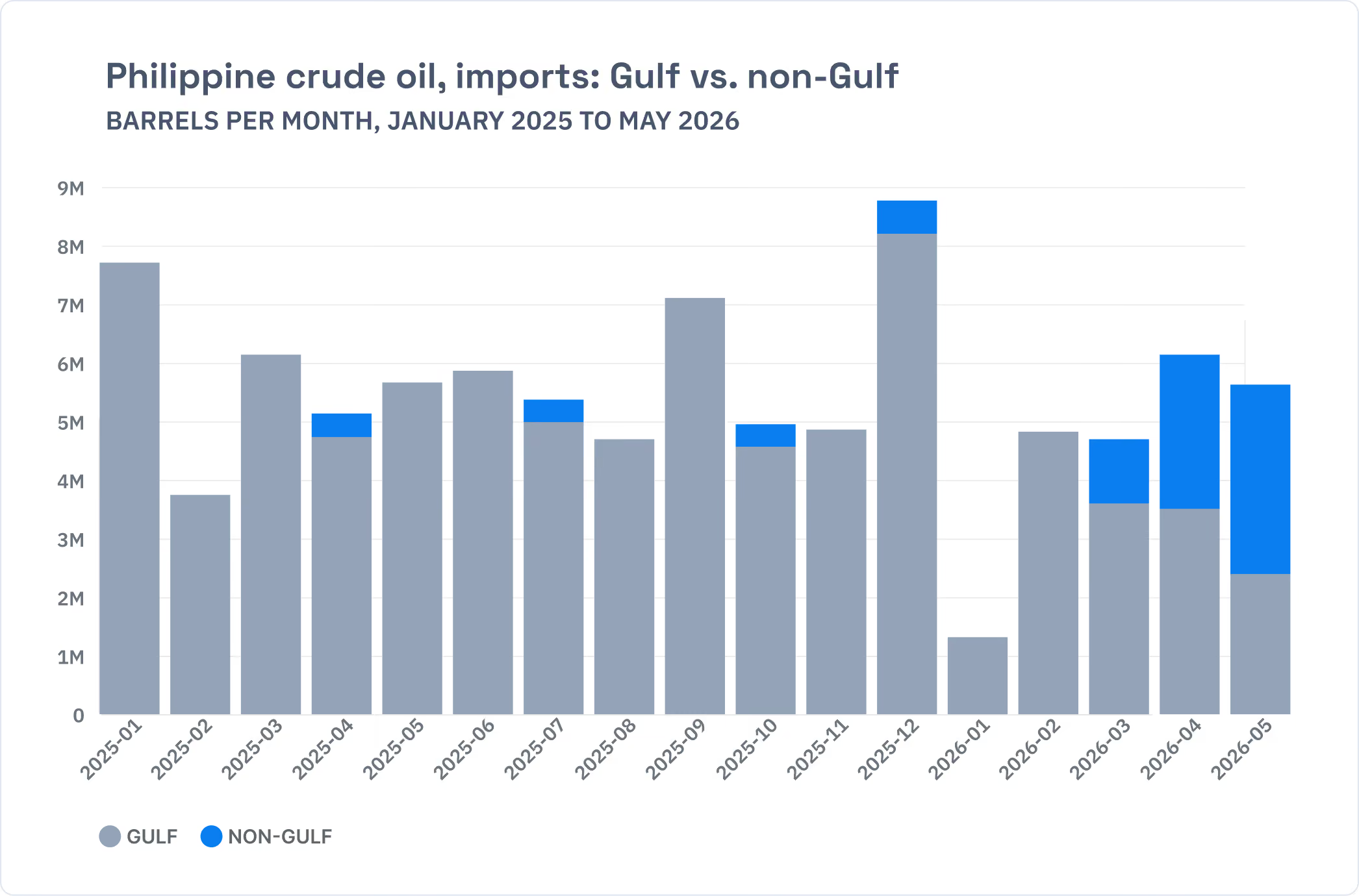
The Philippines’ challenges are disrupting its role in the global economy, as workers face unreliable commutes and companies face skyrocketing energy costs. “The Philippines is the canary in the coal mine of the Hormuz crisis,” says ImportGenius Director of Research William George, who co-authored a white paper on the topic for the Hinrich Foundation with Lead Analyst Lynn Hughes. “The longer the conflict goes on, the greater the likelihood that these challenges will spread to other countries.”
The cost to people — and to business
Diesel prices in the Philippines, which averaged just under $80 per barrel in February of this year, reached above $150 per barrel in April. The same trend holds true for other petroleum products including gasoline and jet fuel. And while the April 7 ceasefire agreement between the United States and Iran brought prices down, the renewal of hostilities will likely cause prices to spike yet again.
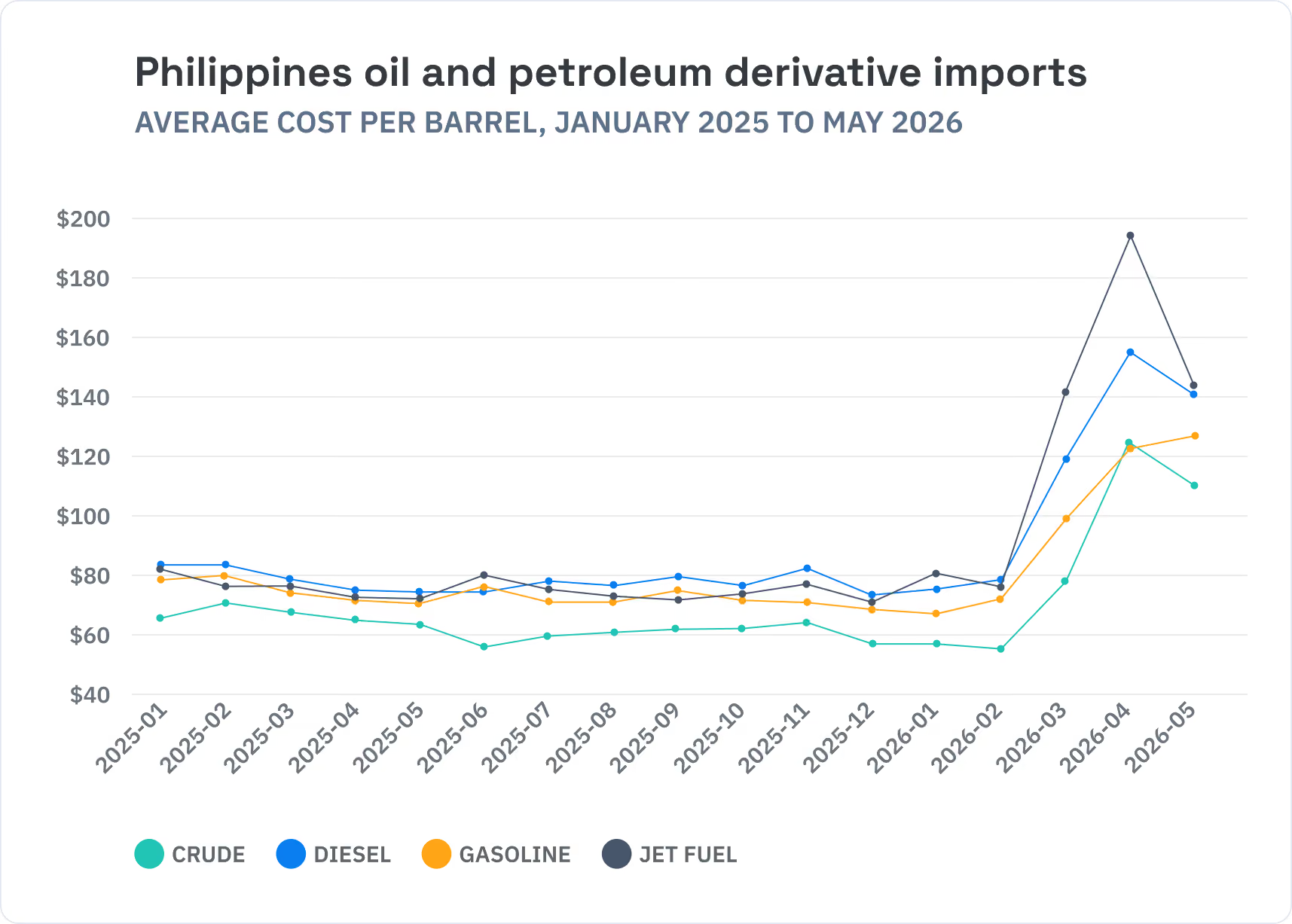
Those diesel prices led many Filipinos to leave their cars at home and commute by transit. It also led the drivers of jeepneys — the popular minibuses converted from leftover U.S. Army jeeps — to go on strike, overcrowding other forms of mass transportation.
Food prices have also increased significantly, as a 15% increase in the cost of fertilizer — much of it also imported from Gulf states — coincided with the Philippines’ rice planting season. More than 10% of the Philippines’ population lives below the poverty line, and another 30% are at risk of falling below it.
Also at risk is the Philippines’ role in high-tech supply chains. Semiconductors are both the Philippines’ largest import and its largest export, as the country plays a small but crucial niche in the semiconductor industry: assembly, testing and packaging. It’s an energy-intensive process, with electricity costs accounting for up to 40% of some factories’ operating costs — a number that is surely much higher now.
.avif)
“The viability of this industry is threatened not just by the rising cost of power, but by all the social impacts that are rippling out from those rising costs,” says George. “The Philippines has until now been a seamless player in a vast supply chain, but it now risks becoming a chokepoint itself.”
Countries, industries at risk as conflict drags on
The Philippines’ challenges have been exacerbated by the fact that — unlike the United States, China, Japan and others — it does not have a strategic petroleum reserve, leaving it vulnerable to supply shocks and unable to mitigate price spikes. Other Asian countries without strategic reserves include Vietnam, Indonesia, Malaysia and Thailand.
The Philippines recently announced plans to create a strategic reserve. Japan is offering both financial and technical assistance to the Philippines and others, though these new stockpiles will not be operational any time soon.
“Supply chain leaders are accustomed to managing risk for tariffs and sanctions, but this is a completely different kind of risk,” says Kanko. “The conflict in Iran is causing very different impacts for every country in their supply chain. They need to apply that lens to their risk assessments now.”

Shock proof your supply chain today

Shock proof your supply chain today


More blogs & reports