

Foreign vehicle imports from Mexico down 21% in Q2 2026
As prices stabilize, Japanese and Korean automakers suffer second consecutive quarterly decline
What you’ll learn in this article:
- Why foreign auto imports continued their decline in the second quarter.
- Which manufacturers reduced import volumes the most — and which automakers continue to gain ground.
- How the USMCA renegotiations could further upend the industry.
🎯 Best for: Supply chain executives, procurement leaders, and strategic planning executives across the automotive, steel, and plastics industries.
Foreign automobile imports from Mexico to the United States fell by 21% in the second quarter of 2026 to 238,687 vehicles, according to data analyzed by ImportGenius. Meanwhile, vehicle imports from Mexico by domestic manufacturers increased by 7% to 398,066 vehicles, stabilizing domestic import totals at typical levels.
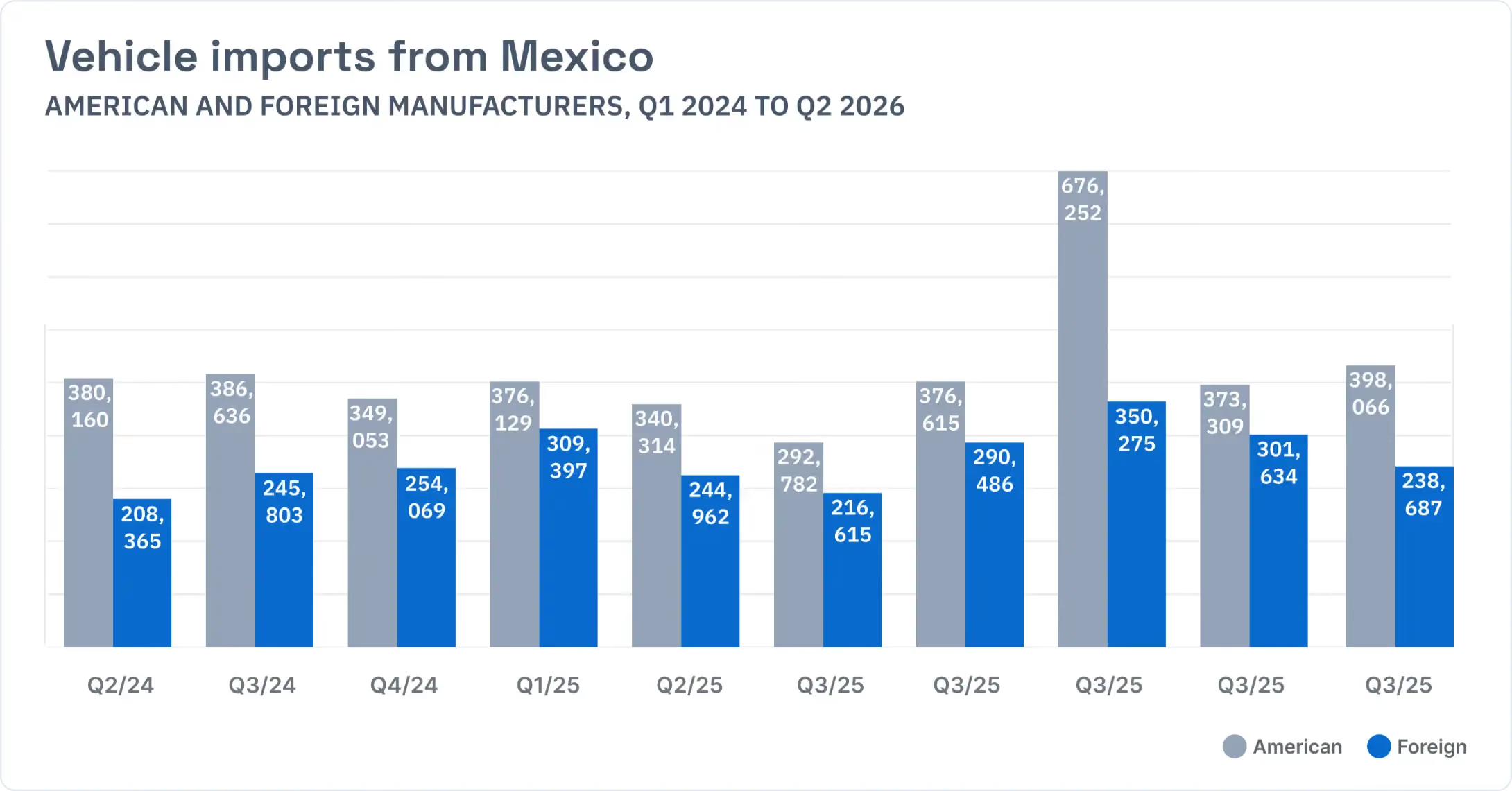
The data reflects the preferential position of American manufacturers’ supply chains under current U.S. rules. Since April 2025, all imported vehicles are subject to a 25% tariff, but those tariffs can be offset by the United States-Mexico-Canada Agreement: in essence, the tariffs do not apply to the vehicle components that originate in North America.
“The auto tariffs have been in place for more than 12 months now,” says ImportGenius CEO Michael Kanko. “The data shows that American vehicle manufacturers are better positioned to use the USMCA’s rules of origin to their advantage.”
Nissan ebbs, Stellantis rises, prices finally normalize
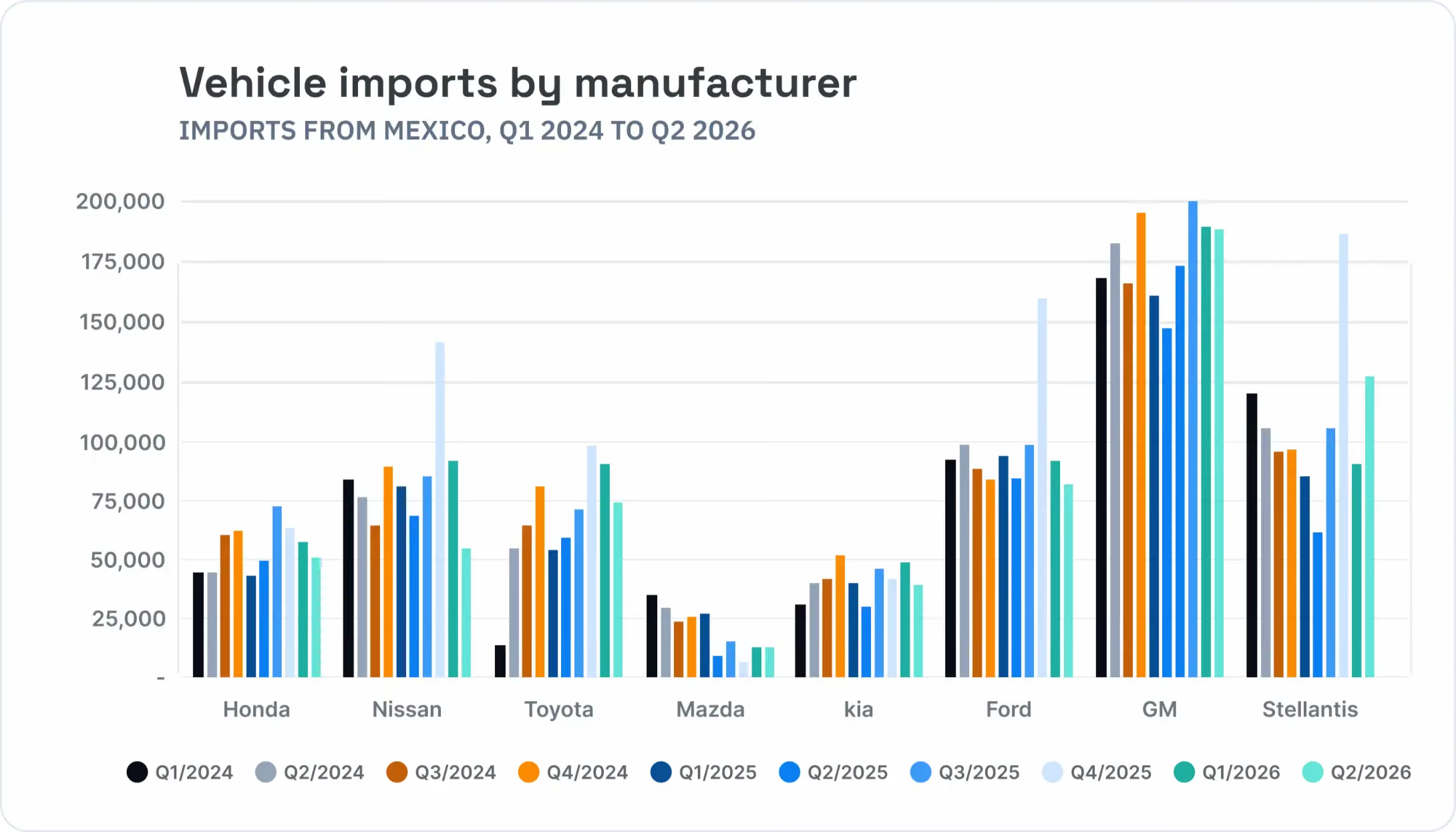
Among the eight importers analyzed by ImportGenius (Honda, Mazda, Nissan and Toyota from Japan, Korea’s Kia Motors, and American manufacturers Stellantis, GM and Ford), Stellantis registered the highest increase in imports. The maker of the Chrysler, Dodge and Jeep brands brought in 36,419 more vehicles this quarter, up 40% over the first quarter of the year.
Among foreign manufacturers, all but one suffered double-digit import declines. Nissan experienced the steepest decline, a change of -33% over Q1, followed by Kia (-20%), Toyota (-19%) and Honda (-11%). Mazda’s imports held steady with an increase of 1%. The data reflects foreign manufacturers’ less favorable tariff economics, though it’s not necessarily a sign of weakness: their Mexican exports can be diverted to other destinations, including Canada.
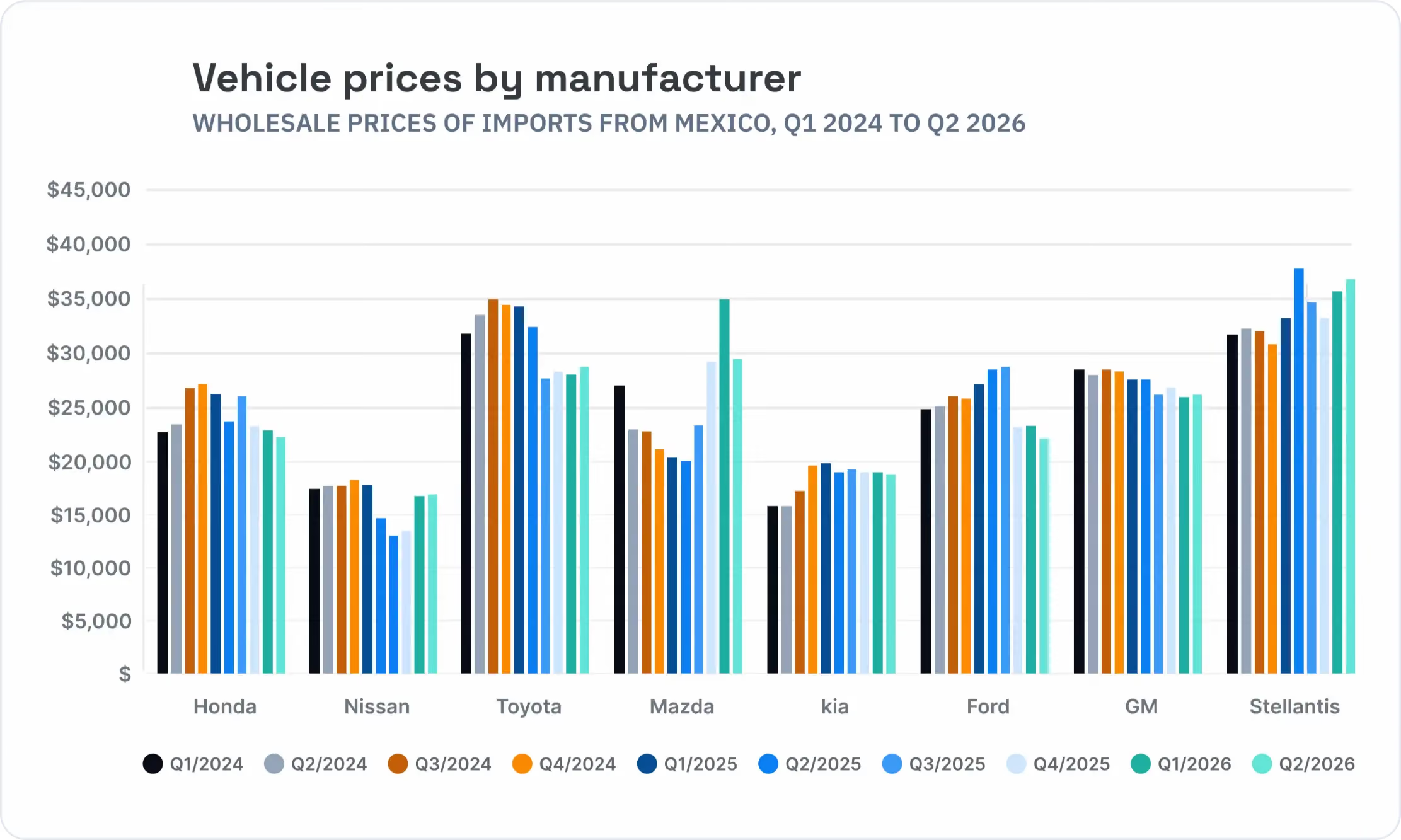
The Q2 data also showed greater stability for vehicle prices compared to previous quarters, across both domestic and foreign manufacturers. Mazda was again the outlier, registering a price decrease of 16% in the second quarter, while the seven other manufacturers all registered minimal price changes, ranging from -5% (Ford) to +3% (Stellantis). “The relative calm in prices is notable given that, less than a year ago, price fluctuations of 10 to 20 percentage points were common,” notes Kanko.
USMCA renegotiations could threaten price stability
Because the USMCA has helped stabilize both domestic imports and industry-wide pricing, there is concern in the sector regarding the future of the agreement, which is currently subject to renewed discussions among the three countries.
The USMCA has also transformed the landlocked port of Laredo, Texas into the country’s busiest, surpassing even Long Beach. At the recent Port Laredo Global Trade Summit, speakers underlined the vital role USMCA plays in the health of the North American auto industry.
“The Port of Laredo is booming,“ says Kanko. “And it’s not just the big manufacturers that benefit from the USMCA, it’s all the small manufacturers that feed into the automotive supply chain as well.”
For procurement leaders, monitoring the progress and the outcome of the USMCA negotiations will be vital in the months ahead. “The data shows that tariffs can change corporate behaviour in terms of where companies locate their manufacturing and source their inputs,” says Kanko. “Any changes to the deal will reverberate throughout their supply chains.”
[CT1]

Get the full picture of the automotive supply chain

Get the full picture of the automotive supply chain


More blogs & reports

.avif)