
Trade truce with China helps produce a banner year for Halloween imports, including record-high Christmas landings in September
What you’ll learn in this article:
- Why Holiday imports to the U.S. have rebounded from last year’s trade war.
- How procurement has shifted to avoid tariff changes and inventory shortages.
- What it means for U.S. supply chains.
🎯 Best for: Chief Procurement Officers, retail procurement professionals, global supply chain leaders.
America’s trade truce with China, combined with shifting import patterns by U.S. retailers, are driving a record-breaking year for holiday imports as Halloween, Thanksgiving and Christmas themed goods arrive in the U.S. and make their way onto store shelves.
ImportGenius data shows that imports are rebounding substantially in 2026 following a year of scarcity in 2025. Halloween imports are up by 24% in 2026 compared to the same 9 months in 2025, while Thanksgiving imports are up 30% for the same time period.
Meanwhile, Christmas imports had a banner month in September, reaching their highest single-month total in the last 5 years. Overall Christmas imports are up 11% to date over last year and could climb even higher, since Chinese Leader Xi Jinping and U.S. President Donald Trump struck a deal last month that included eliminating tariffs on most Christmas items.
How does Jan–Sept 2026 compare with the same period in 2024? Should we add a sentence somewhere in the issue answering that to establish whether a “record-breaking year” is justified?
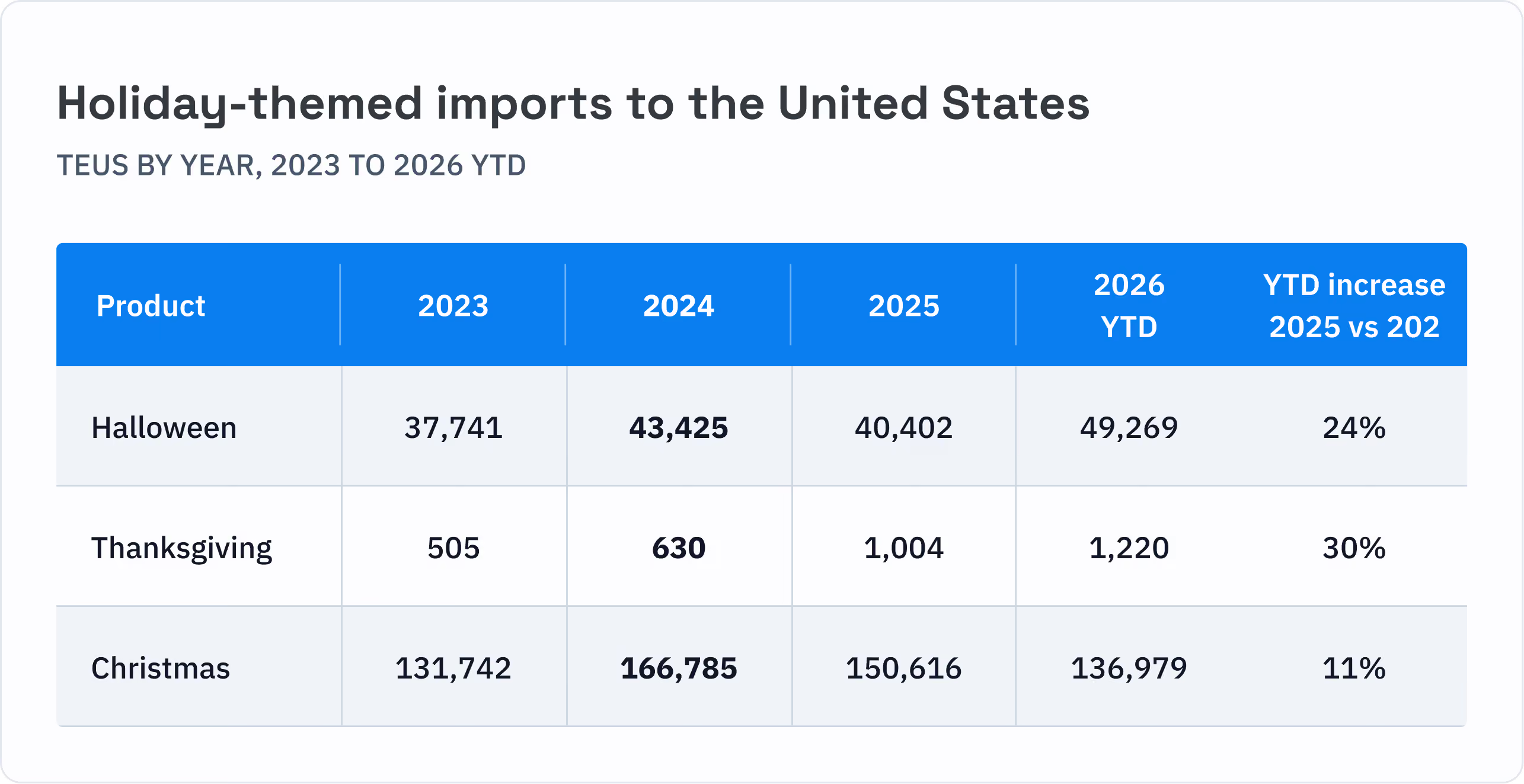
TEUs by year, 2023 to 2026 YTD. Source: ImportGenius
“Trade volatility has changed the way retailers manage their holiday inventory,” says ImportGenius CEO Michael Kanko. “In the past, retailers have concentrated most of their holiday imports in just one or two months. This year, peak season for holiday imports lasted considerably longer than that. It’s a sign that retailers are being simultaneously cautious about trade policy and bullish about holiday spending.”
Amazon, Spirit Halloween top U.S. costume importers
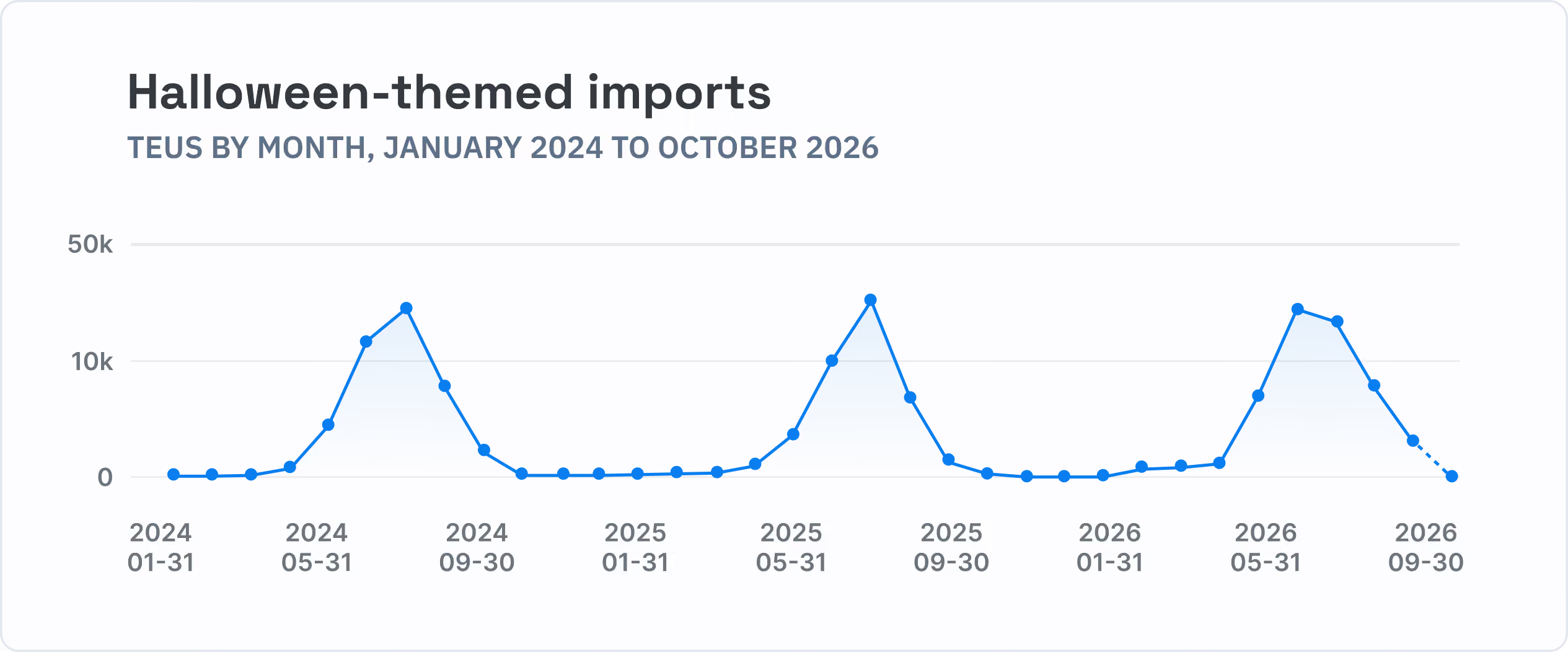
Halloween imports demonstrate the way importer behaviour has shifted. This year’s peak for Halloween imports — including costumes, decorations and other themed goods — came a month sooner, in June rather than July. Imports in May were also much higher than usual, as importers sought to frontload inventory as a hedge against trade volatility.
It’s proving to be a banner year for Halloween costumes in particular: imports have more than doubled year-over-year, from 1,942 Twenty-foot Equivalent Units (TEUs) last year to 4,106 TEUs so far this year. The online retailer Amazon is the country’s largest costume importer, accounting for one-fifth of the total, while Spencer Gifts, the company behind the Spirit Halloween pop-up chain, is second with 15% of the total.
Christmas imports set single-month record in September
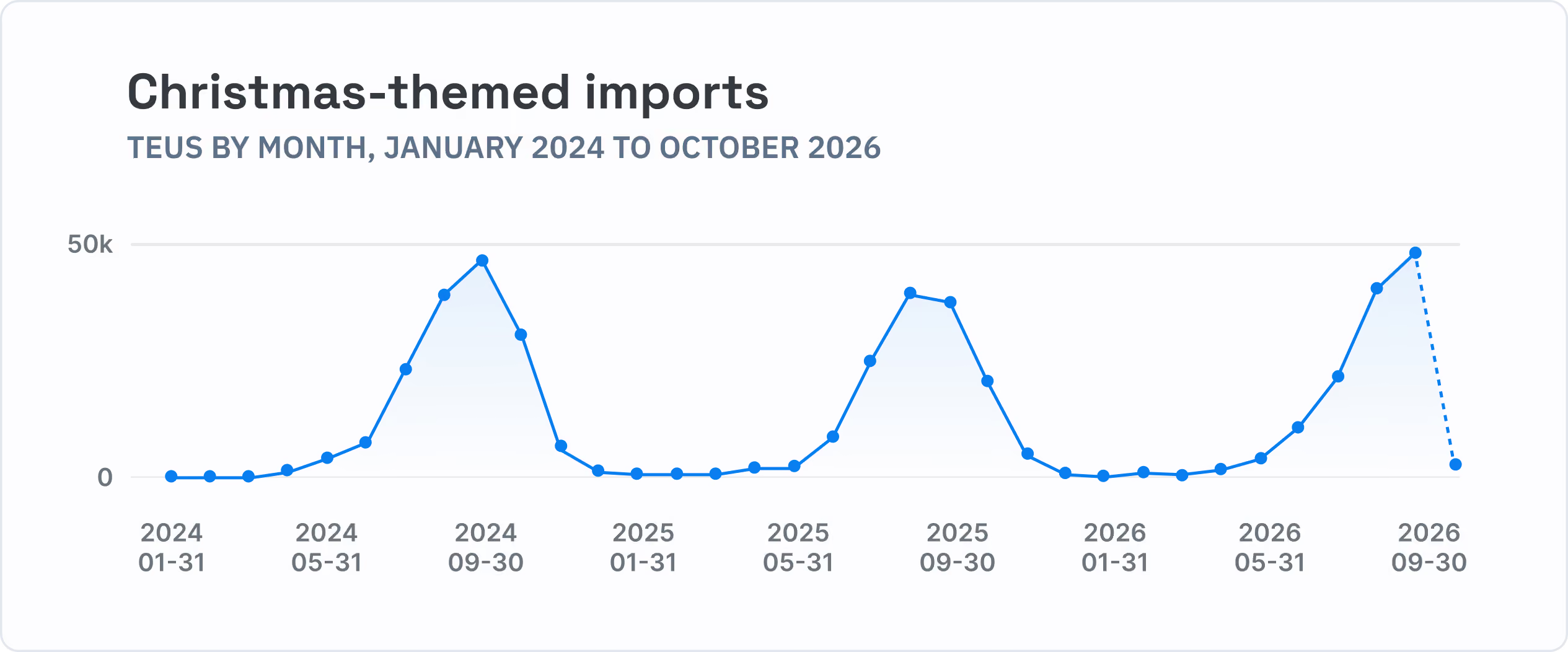
Meanwhile, retailers and their suppliers are working feverishly to stock up on Christmas inventory. Christmas-themed imports, which like Halloween imports began their upswing earlier than usual, reached unprecedented heights in September. More than 48,000 TEUs arrived at U.S. ports, surpassing the previous high of 46,500 TEUs in September 2024.
Consumers are unlikely to face the same shortages as last year for things such as artificial Christmas Trees, as imports are up 21% over the same period last year. The same goes for nativity scenes and sets, whose 2026 imports to date have already surpassed those from all of 2025 by 24%.
Business lessons from the Holiday rebound
The biggest change between the two years has been the tariff rate on China, which rose as high as 145% in the spring of 2025. The rate eventually settled at 30% in May, but most importers still found that too high a cost to absorb, leading to lower inventories and shortages on store shelves last Christmas.
This year the tariff on Chinese goods was at 10% in the spring, rising to 12.5% in late July following the imposition of new Section 301 tariffs. Some importers have also switched to suppliers in different countries. “Holiday importers clearly know where their red line is on tariffs,” says Kanko. “At 30%, they were too exposed. At 12.5% they could make it work. That’s a strong signal to any importer.”
What hasn’t changed is America’s heavy dependency on Chinese goods. “America’s holidays are still made in China,” says Kanko. “The data shows that China is the source for more than 80% of all Christmas imports and 90% of Halloween and Thanksgiving imports. With tariffs coming down further, that’s unlikely to change.”
[CT1]

Are your competitors stocking up earlier?

Are your competitors stocking up earlier?


More blogs & reports
.avif)