Red location pin icon.
Indonesia Import & Export Data

Unlock strategic trade intealligence in Southeast Asia's largest emerging economy

Gain visibility into China–Indonesia trade flows, identify regional suppliers, find new customers, and monitor your competitors across this high-growth corridor.

76.2k total companies, 410M total shipment records. Last updated: Jun 2025
Abstract dark background with two large, softly glowing blue and green gradient spheres and small scattered light dots.

Indonesia import & export data on ImportGenius

Discover the key fields available in ImportGenius’ Indonesia dataset — detailed shipment records designed for supplier vetting, lead generation, and market analysis.

Origin, transit, and destination ports

Track a shipment’s full route — from where it was shipped, through intermediary ports, to its final arrival point. Ideal for mapping supply chains and uncovering trade corridors.

cube icon

Quantity, measure, net weight, and package count

Provides shipment size and packaging details. You can use this to assess shipment volume, frequency, and consistency to evaluate supplier reliability or market demand.

Intelligence tool

CIF, VAT, and all duties

Cost, Insurance, Freight, and applied taxes or duties. Analyze landed costs, compare competitor shipping expenses, and estimate total import values.

Booth

Importer name and address

Names and contact details of companies receiving the goods. Identify active importers, uncover new leads, and analyze market participation within Indonesia.

Truck

Exporter name, address, and country

Details of companies shipping the goods. You can use this to find verified suppliers, evaluate trading relationships, and benchmark sourcing networks across countries.

More available data

Buyer Address
Buyer Country
Buyer Name
Clearing Country Office
Declaration Date
Declaration Number
Destination Country
Destination Port
Export Duty
Export Duty Tariff
Export Port
Exporter Address
FOB (USD)
FOB Value (FC)
Foreign Currency
Freight (USD)
Gross Weight (KG)
Importer Country
Insurance (USD)
Loading Customs Office
Loading Port
Net Weight (USD)
Net Weight (KG)
Net Weight per Quantity
Package Type (USD)
Quantity
Unit

Why Indonesia matters in global trade

As the world’s fourth most populous country and Southeast Asia’s largest economy, Indonesia sits at the center of regional trade. It straddles the Strait of Malacca, a maritime chokepoint through which one-quarter of global trade moves, and is rapidly scaling its domestic manufacturing base through pro-industry policies.

Maritime gateway

Connects China, India, and ASEAN via the world’s fifth-busiest shipping lane.

Domestic market power

270M consumers with rising middle-class demand.

Mineral transformation

Nickel, tin, and bauxite refining drives energy-transition supply chains.

Indonesia trade snapshot

People
Population: 270M (4th largest globally)
Intelligence tool
GDP (PPP): 10th largest economy
Earth
Trade blocs: ASEAN | RCEP | BRICS | CPTPP (pending)
cube icon
Top exports: Palm oil, nickel, electronics, textiles, vehicles
Ports covered: Jakarta, Surabaya, Medan, Makassar
Decorative

Trade bloc footprint

ASEAN
RCEP
CPTPP
EU-INDONESIA  FTA
BRICS

What drives (and challenges) Indonesia’s trade

Major industries

Palm oil & agriculture
55% of global output; major exporter to China & India
Nickel & metals
Largest global reserves, powering EV batteries
Electronics assembly
Growing semiconductor and device exports
Textiles & apparel
Cost advantage + ASEAN tariff preferences
Automotive & shipbuilding
New EV and logistics hubs

Emerging risks

Sustainability compliance
EU deforestation law affects market access
Export restrictions
Raw ore bans reshape supply chains
Policy shifts
Rapid industrial regulation changes
Labor costs
Rising wages in major SEZs
Infrastructure bottlenecks
Still improving connectivity

Major ports & infrastructure

Map outline of the Indonesian archipelago on a light background.
Tanjung Priok (Jakarta)
Indonesia’s busiest port, handling over 50% of national trans-shipment cargo with a capacity of ~7.5M TEUs.
Tanjung Perak (Surabaya)
The main gateway for East Java and Indonesia’s second busiest port, processing ~4M TEUs, key for industrial exports.
Belawan (Medan)
Indonesia’s busiest port, handling over 50% of national trans-shipment cargo with a capacity of ~7.5M TEUs.
Makassar (South Sulawesi)
Eastern Indonesia’s logistics hub (~17M tons), central to the national Sea Toll network.
Decorative

Plans for major port developments and infrastructure

2020

Partimban Port (West Java)

Phase 1 active; full capacity by 2027 (7.5M TEUs, 600K vehicles)

2026

Tanjung Priok (Jakarta)

Expansion to 12M TEUs with new rails links to logistics hubs.

Ongoing

Sea Toll & Sulawesi Corridor

New Bitung and Kendari terminals to lower logistics costs.

Planned

High-Speed Rail

Jakarta-Bandung and Jakarta-Surabaya routes to boost cargo flow.

Plans for major port developments and infrastructure

2020

Partimban Port (West Java)

Phase 1 active; full capacity by 2027 (7.5M TEUs, 600K vehicles)

2026

Tanjung Priok (Jakarta)

Expansion to 12M TEUs with new rails links to logistics hubs.

Ongoing

Sea Toll & Sulawesi Corridor

New Bitung and Kendari terminals to lower logistics costs.

Planned

High-Speed Rail

Phase 1 active; full capacity by 2027 (7.5M TEUs, 600K vehicles)

How ImportGenius helps with Indonesia trade data

ImportGenius provides direct access to PEB/PIB customs declarations, updated regularly. Use for:

Competitive intelligence

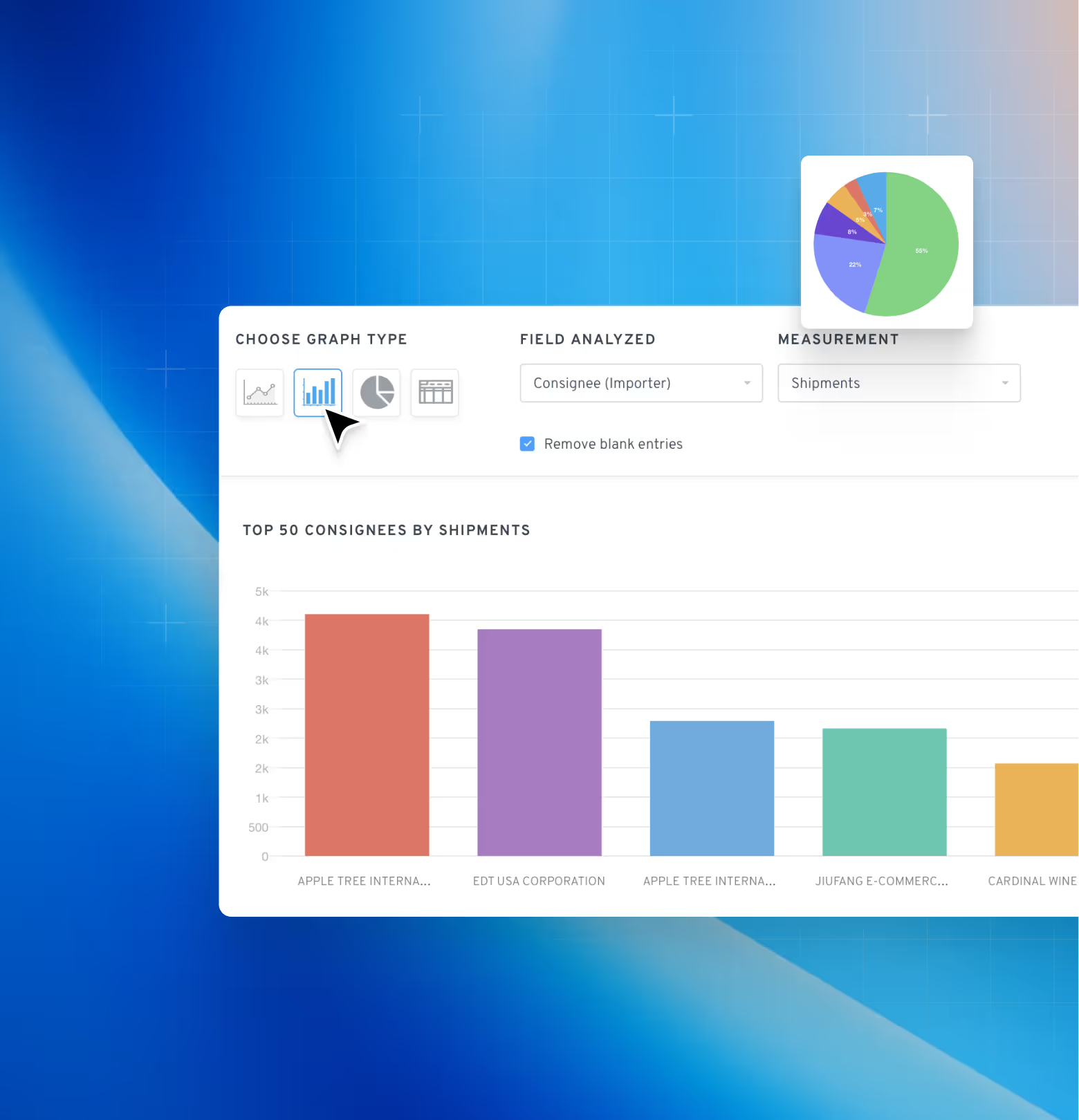
Track competitors’ suppliers, new product shipments, and volume changes to stay ahead in fast-moving industries like electronics and apparel.

Interface showing selection of bar graph type for consignees by shipments with a bar chart displaying shipment volumes of top 50 consignees.
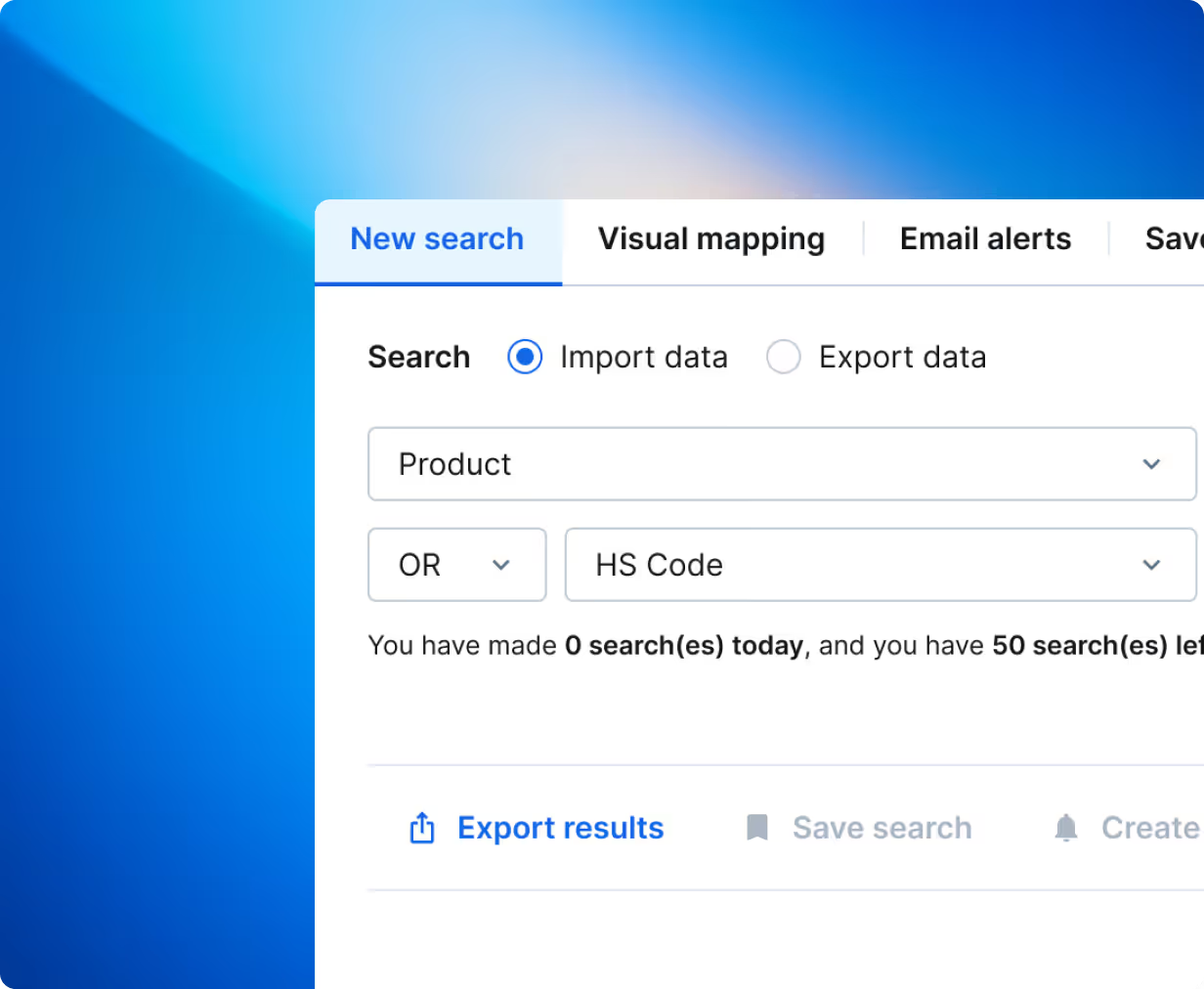
User interface screen showing a search panel with options to import or export data, dropdowns for Product and HS Code, and counters for searches used and remaining.

Supplier discovery & vetting

Identify qualified Indonesian suppliers in palm oil, textiles, or electronics by verifying shipment histories and customer networks.

Supply chain visibility & risk management

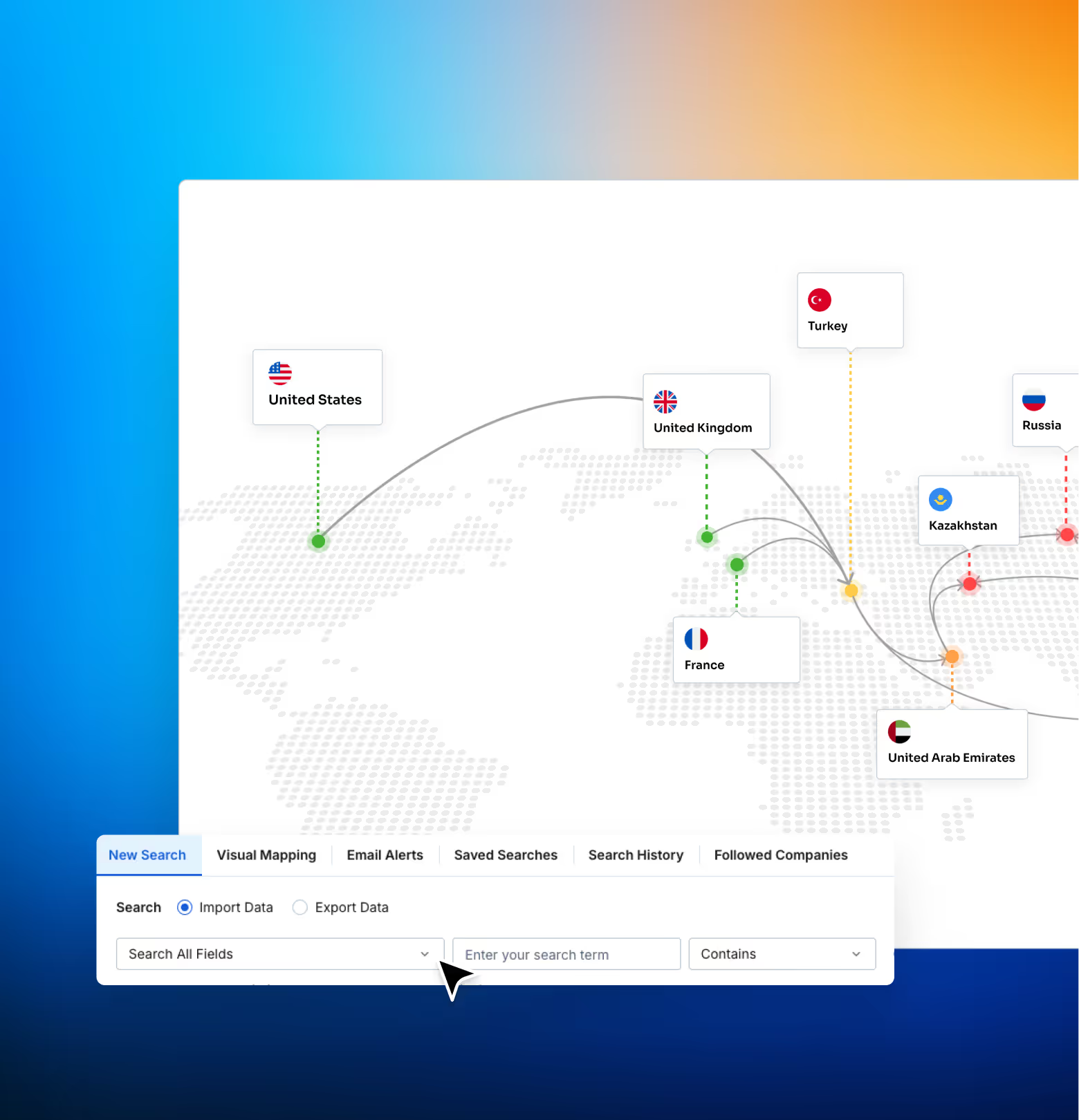
Monitor export restrictions and compliance risks (e.g. palm oil sustainability, nickel bans) with shipment-level insights that reveal exposure in real time.

World map with supply chain connections between countries including United States, United Kingdom, France, Turkey, United Arab Emirates, Kazakhstan, and Russia, showing directional lines and colored data points.
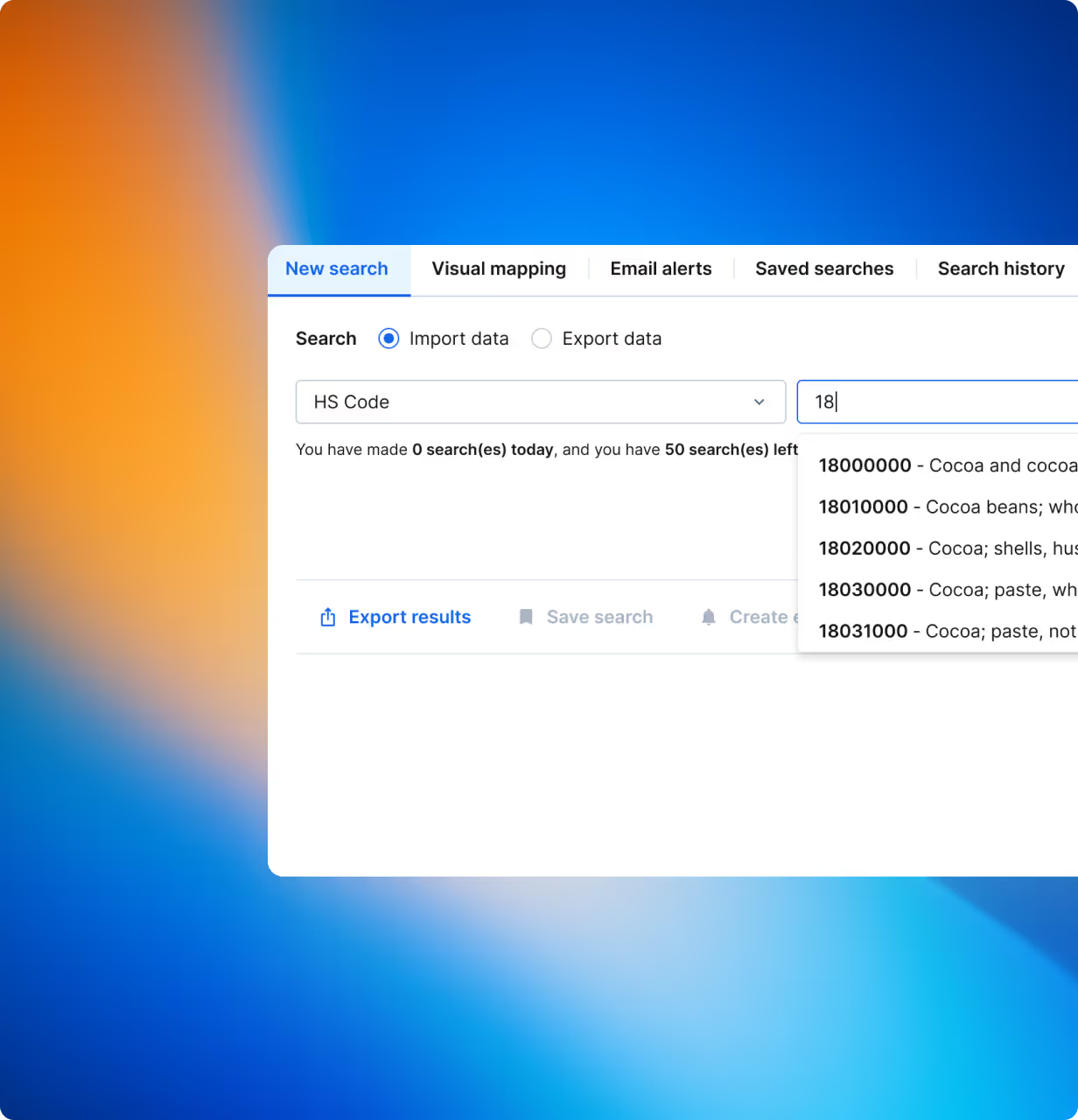
Screen displaying a search interface for import or export data by HS Code with results for codes starting with 18 related to cocoa products.

Market intelligence & sizing

Analyze trade flows by product or HS code to benchmark demand, size market opportunities, and forecast shifts in global supply chains.