

Size your markets and spot growth opportunities with global trade data from ImportGenius
Quantify demand, analyze product trends, and uncover emerging markets using global shipment data—not guesses or outdated reports.
Key insights you will unlock

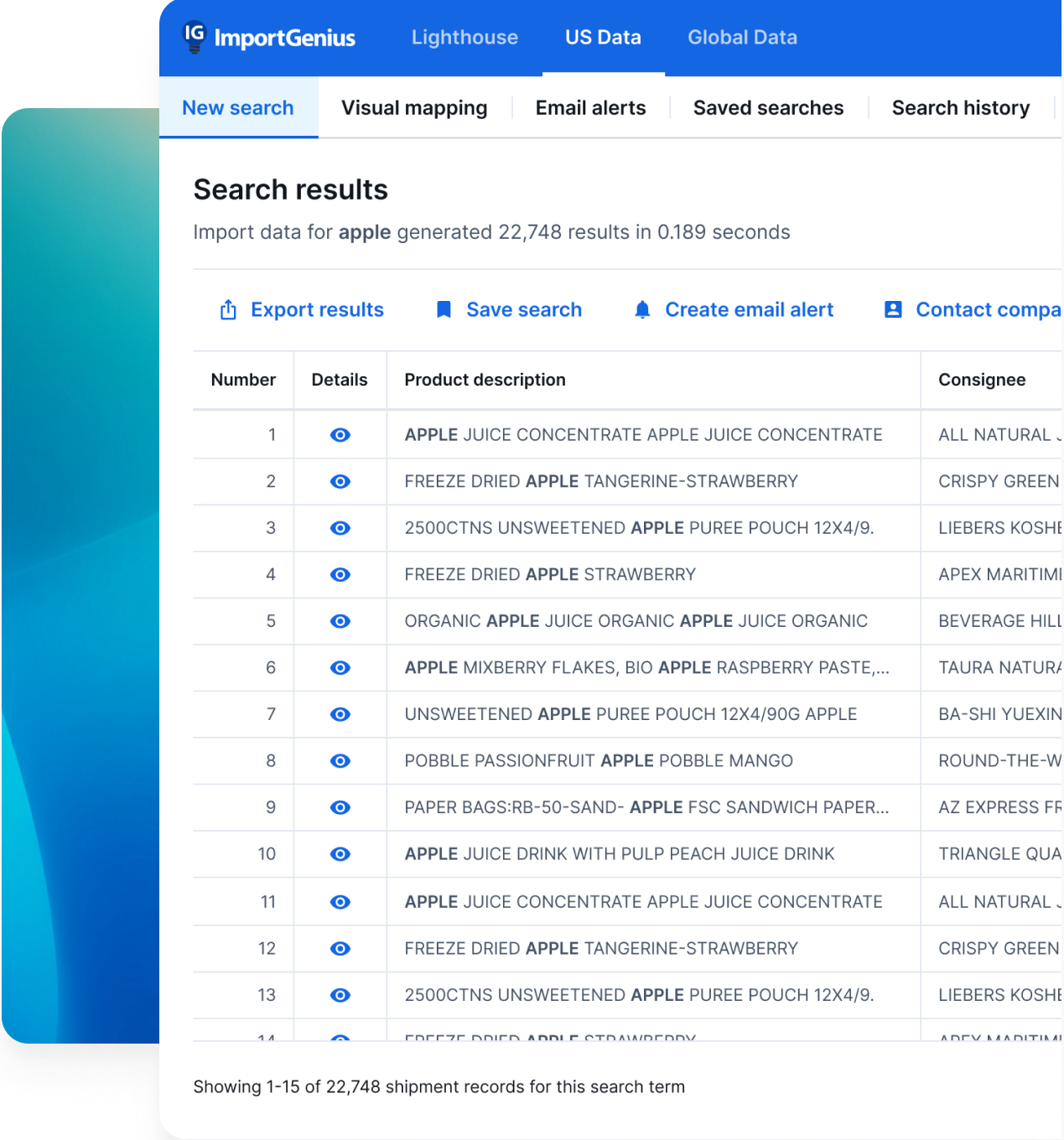
Estimate market size using trade data — Quantify total addressable market by analyzing real import/export volumes across products, regions, and HS codes.
Identify market trends by product or industry — Spot rising categories and shifting industry dynamics early by tracking product-level shipment activity over time.
Analyze seasonal demand patterns — Uncover demand cycles and peak periods using historical shipment trends to improve forecasting and inventory planning.
Assess tariff impact on specific products — Measure how tariff changes influence import volumes and pricing so you can evaluate market-wide effects and competitive pressure.
Monitor product volume flows by country — Track where products are moving globally to identify emerging markets, demand hotspots, and shifting trade routes.
Build 10-year sourcing strategy with trade data — Use multi-year shipment history and long-term trend analysis to design resilient sourcing plans that reflect how markets evolve.


Get the market clarity you need to make confident strategic decisions backed by real trade flows.
Voice of the customer

“We have confidence that we're working with the best manufacturers in part because ImportGenius showed us that they already supply some of the world's top brands.”


“ImportGenius gave us visibility into the actual shipping histories of the manufacturers we were evaluating and helped us feel comfortable we were working with the best suppliers in China.”

.avif)
“Very informative and great site and so quick. Pretty slick.”


“ImportGenius is a great research tool. We use it to evaluate manufacturers to make sure we are working with only the highest quality, most reliable suppliers.”


“ImportGenius is a highly informative tool for monitoring public companies' operating activities. It is an invaluable part of our research.”


“We find new clients for our customs brokerage in the ImportGenius database almost every day.”

Turning trade data into your competitive advantage


Exposing a false tariff claim with trade data
A U.S. manufacturer used ImportGenius to prove their supplier’s justification was bogus—and avoided millions in unnecessary costs

How a global brand combats counterfeit goods with trade data
A leading athletic brand was seeing counterfeit products show up in key markets. They turned to ImportGenius to connect the dots between suspicious movements, product categories, and unknown traders.

The New Procurement Playbook: How Leaders are building smarter, more resilient supply chains
Join our upcoming webinar and learn how procurement teams are finding new suppliers, managing risk, using AI and making better sourcing decisions.
Explore more ways to use trade intelligence
Build a 10-year sourcing strategy grounded in real trade history
Use historical import and export data to understand how sourcing patterns evolve over time — so your long-term procurement strategy is resilient, data-backed, and future-ready.
Track how product volumes move between countries
Monitor import and export flows by country to understand shifting trade patterns, emerging markets, and changes in global demand.
Assess how tariffs affect specific products and market dynamics
Analyze product-level import volumes, sourcing regions, and shipment patterns to understand how tariff changes impact pricing, demand, and competitive positioning.
Understand seasonal demand patterns before they impact inventory
Analyze shipment trends over time to anticipate seasonal peaks and slowdowns — helping you optimize inventory, production, and working capital.
Identify product and industry trends before they reshape the market
Analyze shipment activity over time to uncover rising products, declining demand, and shifting industry patterns — so you can act before competitors do.
Estimate market size with real import and export activity
Use verified trade data to quantify the total addressable market, understand demand by region, and support revenue forecasts with evidence, not assumptions.