Cameroon Import & Export Data

Unlock strategic trade intelligence on Cameroon — a Central and West African hub connecting CEMAC economies to global markets through the Port of Douala.

Gain visibility into Africa–Cameroon trade flows, identify regional suppliers, find new customers, and monitor your competitors across this vital and rapidly evolving corridor.

Abstract dark background with two large, softly glowing blue and green gradient spheres and small scattered light dots.

Cameroon import & export data on ImportGenius

Discover the key fields available in ImportGenius’ Cameroon dataset — detailed shipment records designed for supplier vetting, lead generation, and market analysis.
Folder

HS code and product description

Understand exactly what goods are being traded, classified under international HS Codes and described in detail for accurate commodity research, tariff checks, and supplier analysis.

cube icon

Quantity, unit, gross and net weight

Assess shipment size, volume, and declared weights to evaluate supply consistency, monitoring trade flows or verifying supplier capabilities.

Earth

Exporter name and country

Identify exporting companies and their locations to evaluate supply chains, discover new vendors, and analyze Cameroon’s trade partnerships.

Globe

Destination country and origin country

Trace the journey of goods to understand sourcing patterns, market routes, and potential competitive advantages from trade agreements.

Dollar Bill

Value, actual value, and statistical value

Monitor shipment pricing, declared values, and statistical evaluations to analyze trade margins, benchmark supplier pricing, and assess market competitiveness.

Magnifying Glass

Declaration number and declaration date

Track individual shipments using unique customs identifiers and confirm transaction timelines for auditing, verification, or trade-flow analysis.

Airplane

Mode of transport

Understand how goods are moved across borders—air, sea, or land—for logistics planning and cost comparisons.

Folder

Tax amount

Identify taxes or duties applied to shipments for landed-cost analysis, compliance checks, or tariff impact assessments.

More available data

Currency
Number of Packages
Number of Articles
Operator ID
Operator
Liquidation Date
Regime Code
Regime
Declaration Type Code
Declaration Type
Declaration Status
Declarant Code
Declarant Name
Desk (Customs details)

Why Cameroon matters in global trade

As Central and West Africa’s strategic shipping hub, Cameroon anchors trade across the continent and beyond. From the Port of Douala (CEMAC’s largest port and economic gateway), the country connects African producers to global markets, powering exports of coffee, wood, and other high-value commodities that sustain regional growth.

Maritime gateway

Links Central Africa, West Africa, and Europe through the Atlantic corridor, facilitating vital trade flows and regional re-exports.

Domestic market power

A dynamic population of 25 million consumers driving demand for manufactured and agricultural goods across the region.

Resource transformation

Growing wood and coffee processing industries add value to exports and strengthen Cameroon’s role in Africa’s evolving trade ecosystem.

Cameroon trade snapshot

People
Population: 25,216,237
Intelligence tool
GDP (PPP): USD 44.3 billion
Earth
Trade blocs: AfCFTA | CEMAC | EU–Cameroon 
cube icon
Top exports: Wood, Coffee, Petroleum, Cocoa, Aluminum
Ports covered: Douala Kribi, Limbe, Tiko
Decorative

Trade bloc footprint

AfCFTA
CEMAC
ECCAS
EU–CameroonFTA
GSTP
UK–Cameroon Agreement

What drives (and challenges) Cameroon’s trade

Major industries

Wood processing
Cameroon is a key regional exporter of sawn timber, with steady demand from Europe and China driving growth in value-added processing.
Coffee production
Local roasting and refining are expanding, transforming Cameroon’s traditional coffee exports into higher-margin products.
Petroleum and extractives
Crude and refined petroleum exports continue to anchor the economy, supporting infrastructure and foreign exchange stability.

Emerging risks

Re-export mislabeling
Customs union rules and data processing issues cause export–import misclassification, complicating trade visibility.
Geopolitical pressure
U.S. policy tensions with CEMAC and IMF-related disputes may redirect trade and investment flows toward China and the EU.
Sanctions exposure
Links to sanctioned entities in logistics chains highlight growing compliance risks for regional operators.

Major ports & infrastructure

Douala (Wouri River)
Cameroon's largest port handling over 6M tons and 187,500 TEUs annually, operating multipurpose terminals for containers, bulk, and breakbulk cargo with 27,000 m² quay length.
Kribi (Kienke River)
The country's only deep seaport with 16m draught capacity, featuring a modern container terminal handling 355,000 TEUs and accommodating vessels up to 11,000 TEU capacity.
Limbe (Bay of Ambas)
Second largest port processing ~27M tons yearly, primarily handling petroleum products from the national refinery, timber, and plantation exports with 750m berthing dock.
Tiko (River Bimba)
Southwestern distribution hub handling 29,000 tons annually, serving as processing centre for regional plantation produce including timber, bananas, rubber, and cocoa.
Garoua (River Benue)
Seasonal river port operational June-October, serving northern regions with trade links to Nigeria via inland waterways, handling bagged cargo and consumer goods.
Decorative

How ImportGenius helps with Cameroon trade data

ImportGenius provides direct access to Cameroon customs declarations and regularly updated shipment data.

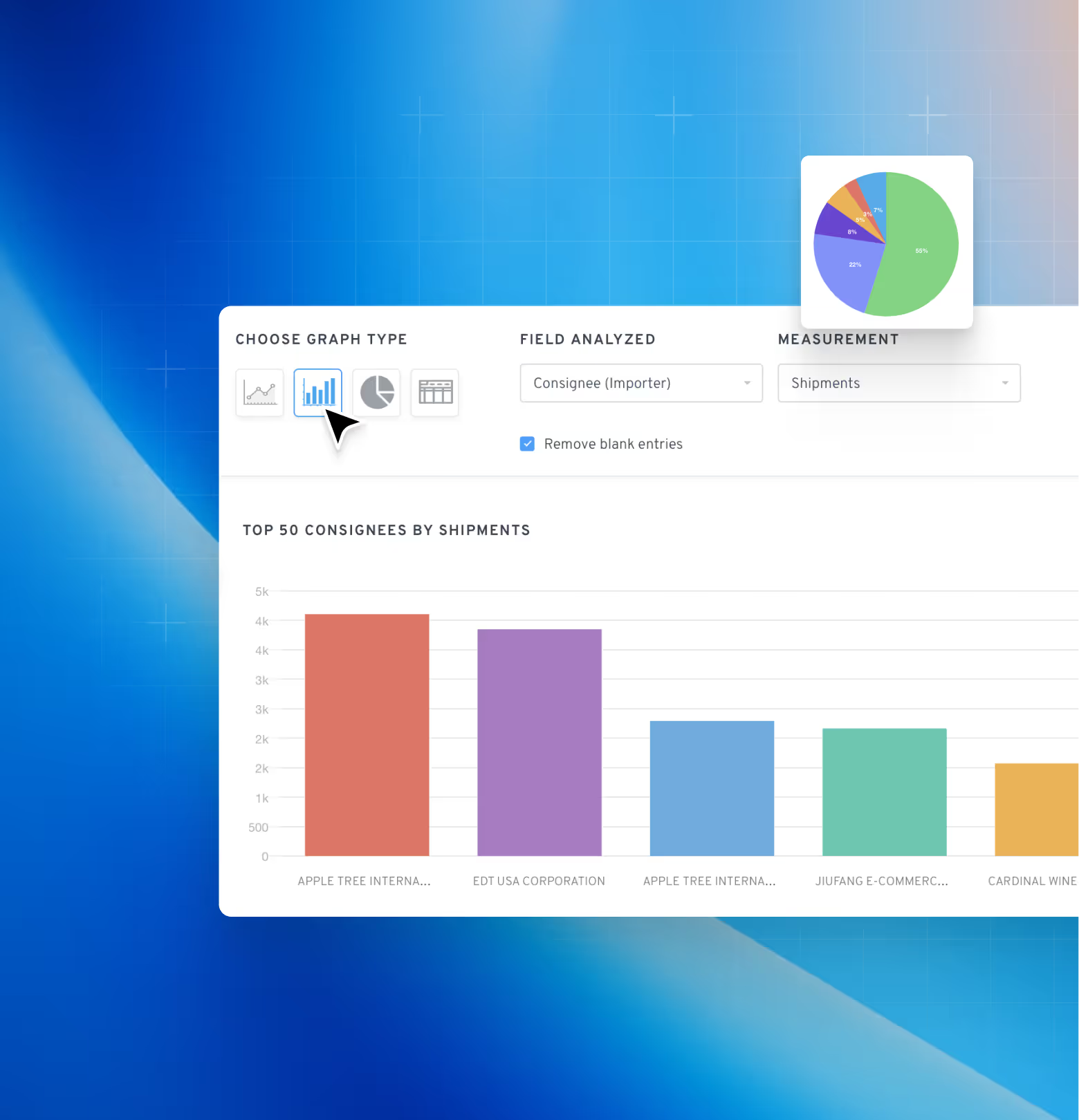
Competitive intelligence

Track competitors’ suppliers, products, and market entries.

Interface showing selection of bar graph type for consignees by shipments with a bar chart displaying shipment volumes of top 50 consignees.
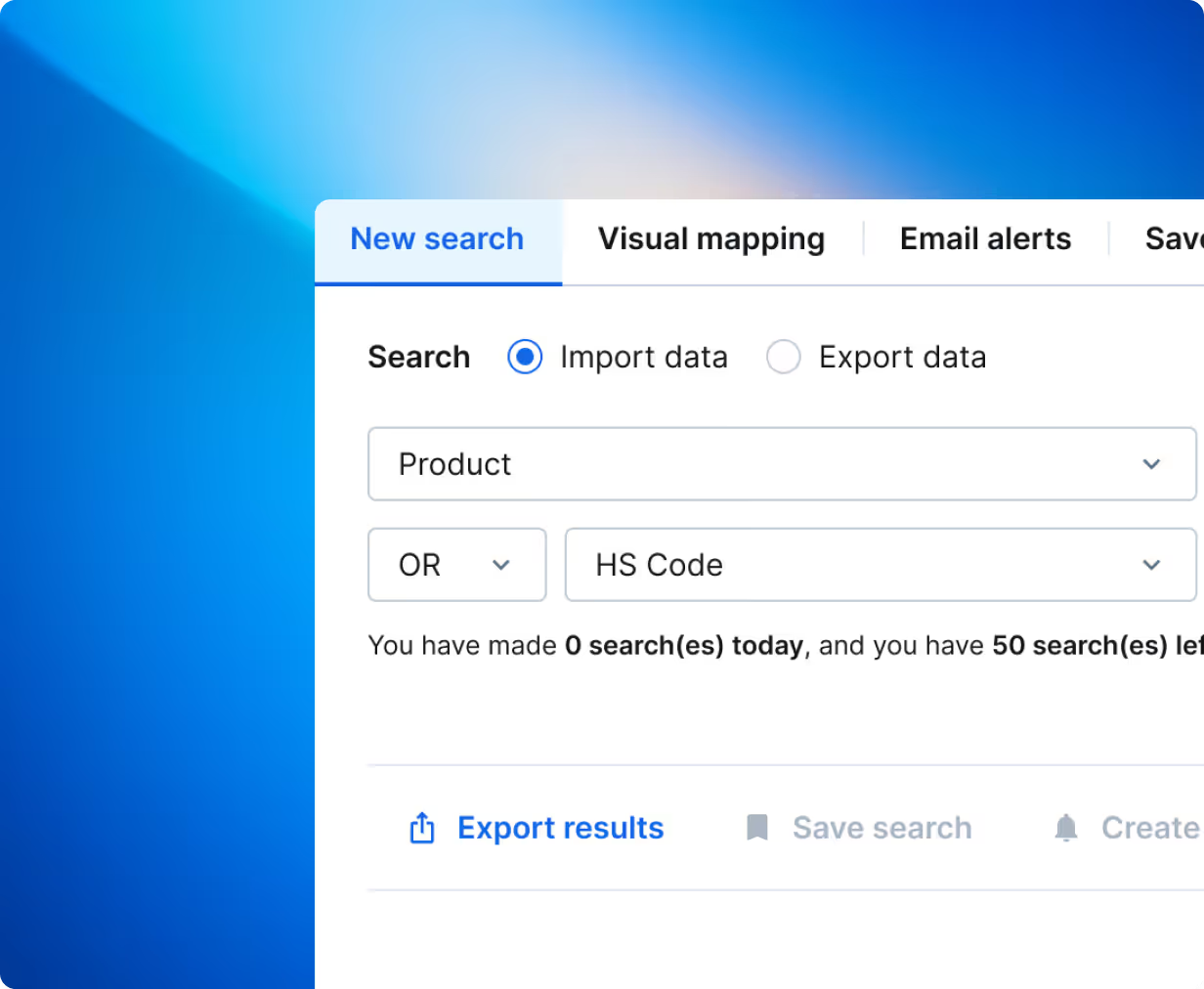
User interface screen showing a search panel with options to import or export data, dropdowns for Product and HS Code, and counters for searches used and remaining.

Supplier discovery & vetting

Identify and validate qualified suppliers in Cameroon.

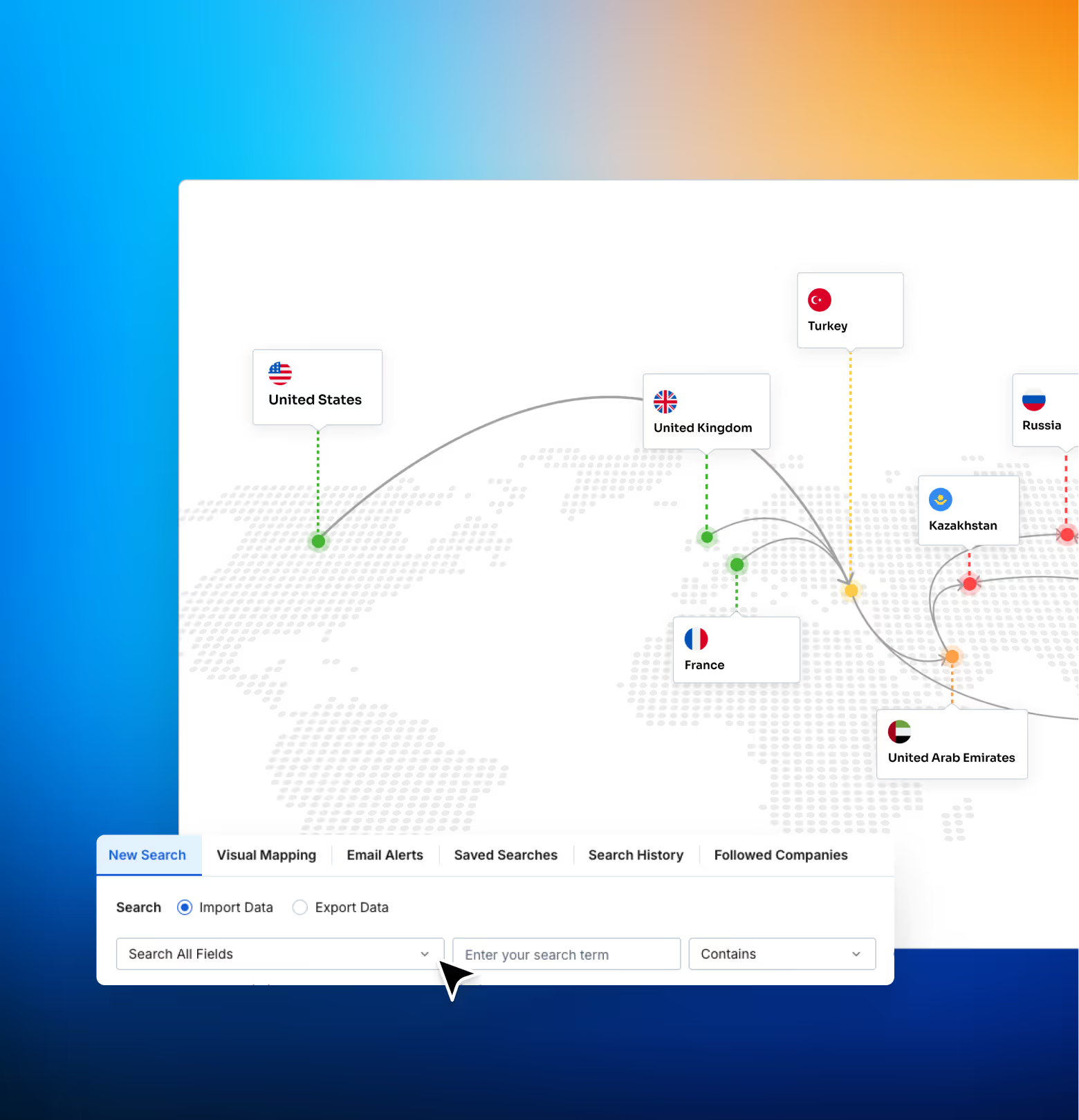
Supply chain visibility & risk management

Monitor policy, compliance, and disruption risks.

World map with supply chain connections between countries including United States, United Kingdom, France, Turkey, United Arab Emirates, Kazakhstan, and Russia, showing directional lines and colored data points.
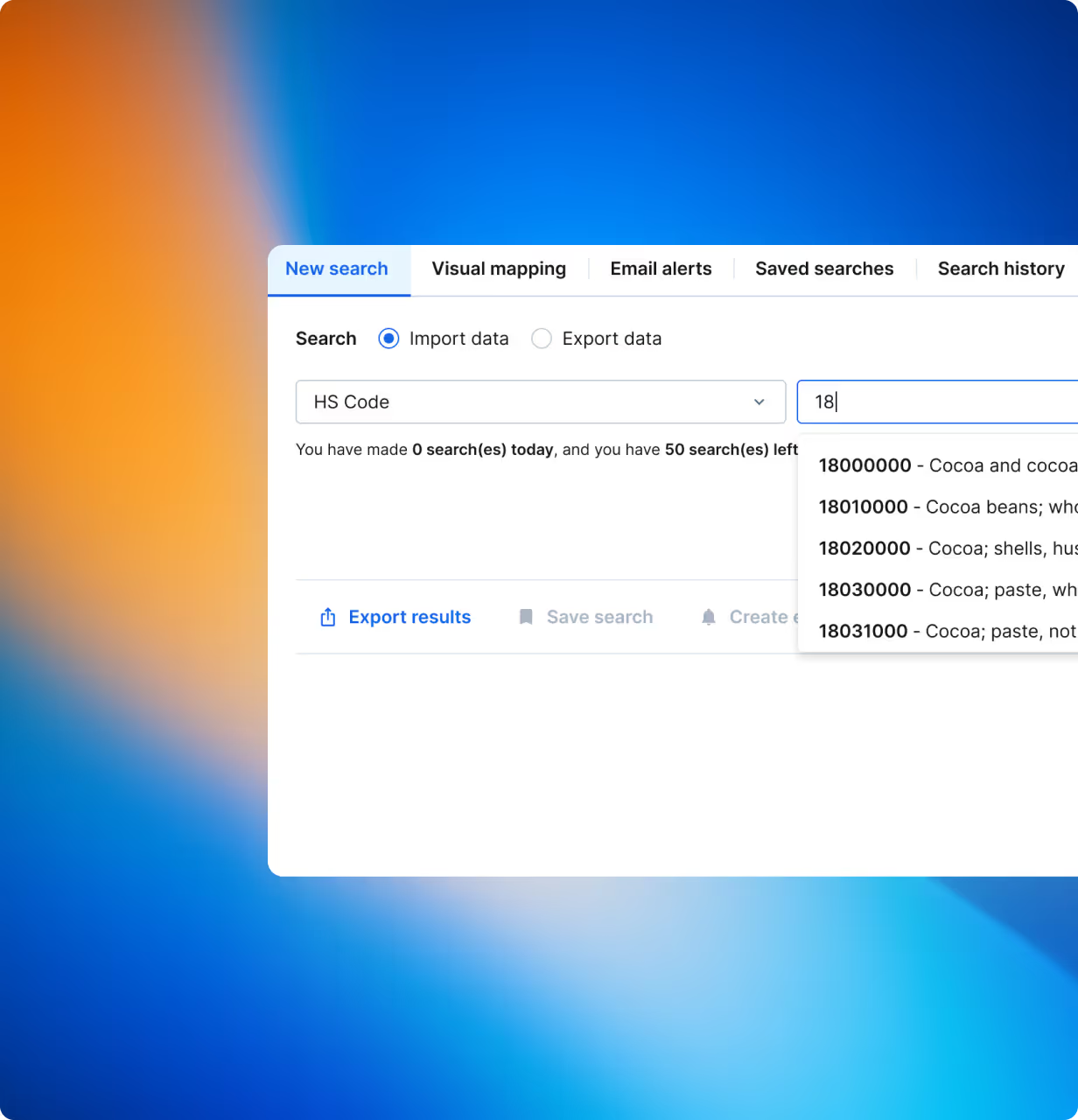
Screen displaying a search interface for import or export data by HS Code with results for codes starting with 18 related to cocoa products.

Market intelligence & sizing

 Analyze HS code trade flows to forecast opportunities.

Turn Cameroon’s trade data into your next growth strategy.

ImportGenius provides direct access to Cameroon customs declarations and regularly updated shipment data.

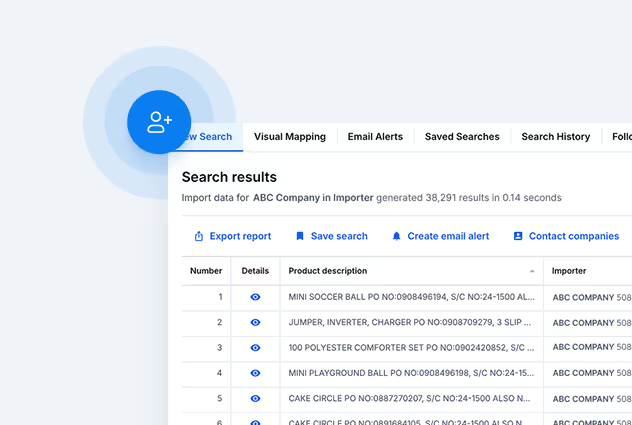
Screenshot of a company search results page showing a table with product descriptions, importer details, and options to export report, save search, create email alert, and contact companies.
Abstract background with smooth gradient shapes in blue and orange tones.