
Panama Canal restrictions, fuel costs, and waning trade war intensity contribute to increase in U.S. imports
What you’ll learn in this article:
- Why U.S. port traffic is surging, with Los Angeles setting a new record.
- Which factors are driving the reshaped shipping patterns.
- Why rising intermodal demand is intensifying competition for freight.
🎯 Best for: Supply chain executives, logistics providers, freight forwarders, trucking companies, and importers.
Heavy container ship traffic has returned to U.S. ports following more than a year of steep volatility, as a variety of factors combine to spark a return to robust U.S. imports.
The Port of Los Angeles announced that it handled more TEUs in a single month than ever before this September, surpassing the previous record set in July 2025. Data from ImportGenius shows that LA’s record-breaking month was also part of a strong run of high traffic that began in June of this year.
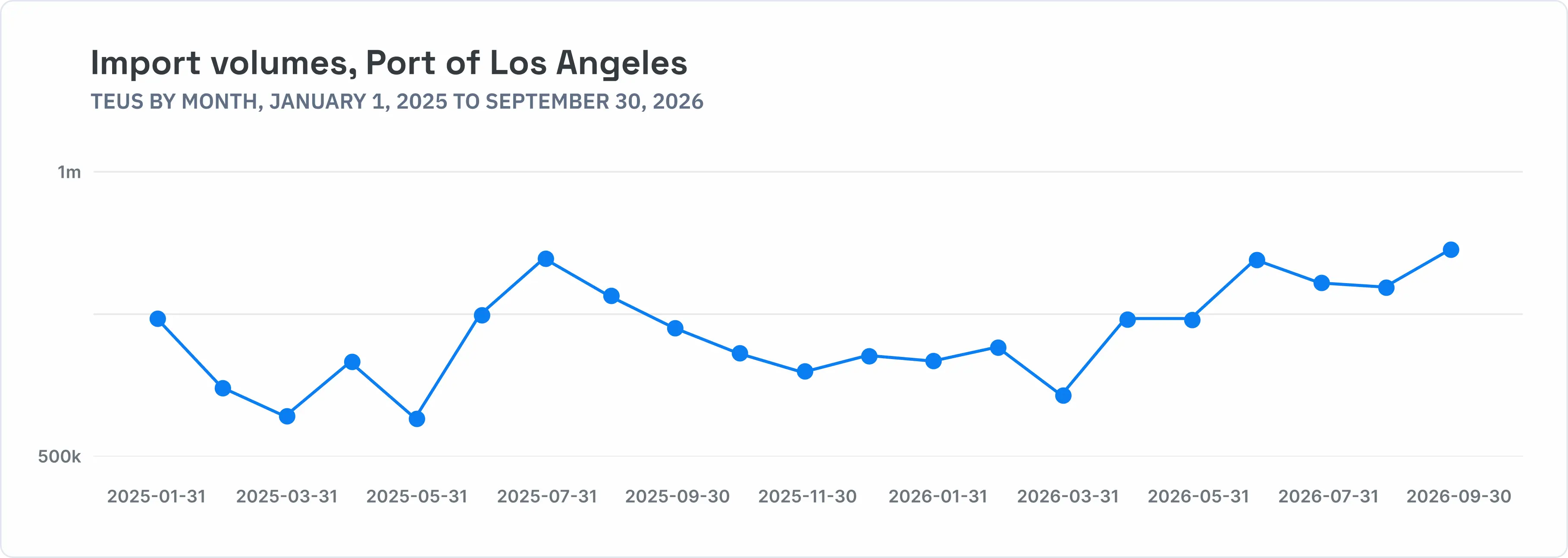
TEUs by month, January 1, 2025 to September 30, 2026
“This isn’t just another short-term spike in the data,” says ImportGenius CEO Michael Kanko. “The Panama Canal’s decision to limit daily transits, combined with rising fuel prices, has vessels choosing to dock at nearby coastal ports instead of taking longer routes.”
Another contributing factor is the waning intensity of America’s trade wars. As tariff levels have stabilized and more Chinese imports are granted a reprieve, it’s beginning to look like a quiet surrender on Washington’s part. “As trade volumes stabilize and even reach new highs, it will be fair to ask just what the administration’s trade policies have achieved.”
West coast ports return to health
ImportGenius data also shows the trend is not confined to Los Angeles, with other U.S. ports — particularly on the west coast — experiencing a resurgence of sustained traffic after a volatile 2025.
Like Los Angeles, both Long Beach and Seattle-Tacoma, which were experiencing volume “whiplash” in early 2025, have both reached high and steady volumes in recent months.
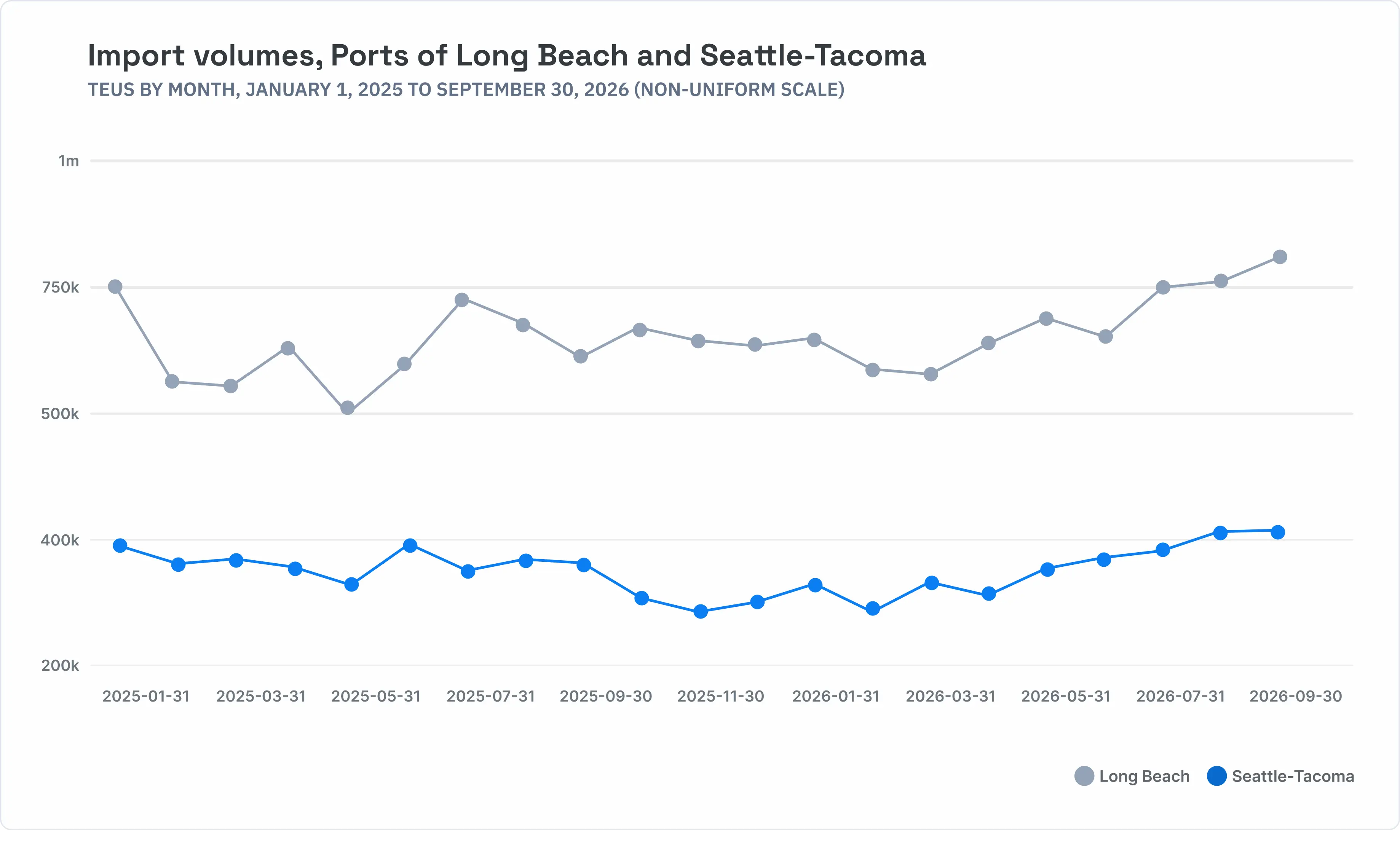
TEUs by month, January 1, 2025 to September 30, 2026
The Port of Long Beach, which recently hosted the annual CHAINge Conference, is bullish about its own future, with plans to double its annual capacity to 20 million TEUs by 2050.
And the positive trendlines are not confined to the west coast. The ports of New York/Newark and Savannah have also seen their volumes both rise and stabilize over the last 3 months. Kanko calls it “an unexpected but welcome sign of stability. The question is how long the stability will last.”
Logistics competition heats up as intermodal grows
The heavy port traffic, combined with the soaring cost of diesel fuel, have led to a growing demand for intermodal transport, which is slower but less expensive. According to the Association of American Railroads, August and September were the two best months in history for intermodal freight.
Meanwhile, the cost of fuel now ranks as the top concern among drivers and carriers. “The cost pressures on truckers are significant right now,” says Kanko. “It’s never been more important for carriers to get empty or deadhead miles to a minimum.”

Find out who’s got freight to move

Find out who’s got freight to move


More blogs & reports